smells like we’ve all all been here before – maybe.

Asta doesn’t think she’s been here before

All of it seems so, well familiar. I barely make a turn without knowing, or think I know that I’ve been there before even though in all probability I haven’t. Or there is the possibility that I have. Could it be the flint stone walls and mix of Edwardian and Thirties and nondescript suburban architecture and homes with front gardens or perhaps the 180 degrees skyline and delicious air scented with salt and vegetation. 

Could it be the smell of two stroke when the Lambrettas overladen with an excess of chrome mirrors assemble at the Martello Tower and the frequency with which I come upon the sort of British motors we passed on our journeys too and from back then; there seems to be a particular fascination with Morris Minors, convertible Triumph Heralds and P6 Rovers.

I was maybe five or six years when I first encountered the softly rolling meadows of The South Downs from the back seat of was it a Morris, or Ford Consul or maybe a grey Austin Cambridge with red leather upholstery. A breakfast cereal size box of Smiths potato crisps between my legs (salt yourself from a twisted blue wrapper). Long days of flickering country lanes with petrol stations appearing out of nowhere amid the beech and oak and miles of shadows.  Men in overalls would nod and smile before noisily inserting the pump into the tank: “one shot or two?” Equally remote, as if emerging from some distant civilisation the pubs where we sat in a garden (children not admitted within) and I would be  handed a shandy and more crisps or with luck a ploughman’s lunch.  

I travel those lanes today, or is it others that appear the same?

A different air and different light to the affluent and effluent south west London suburbia where in winter months we’d wear ‘smog masks’ to and from school. But there in Sussex you could taste the cleanliness and the closer we got to the sea the excitement with it. That endless low wall around Petworth House on approach to the town bearing the house’s name a sign we were nearly there. The precipitous streets of Arundel soon be featured in a television drama. The Swan Inn Fittleworth, Pulborough, Chanctonbury Ring (a particular favourite of my father’s who had a thing for rural landmarks) and other way points to be ticked off and enjoyed on our countdown to the coast. 

And the junction somewhere on the A283 where on our way home mum brought her argument with dad to a close by insisting he stop the car so she could get out. And she did. I didn’t know what she intended to do and I didn’t think she did either although I was too young to know any better. We didn’t walk in those days and she had an aversion to it. I remember her frowning at friends and others who exalted in muddy hikes; an early manifestation of recoiling from political correctness perhaps? I remember dad turning the car around a few minutes later to find her at the place she’d got out. 

The Downs fanning out into the distance as curvaceous and smooth as bars of soap. And thence to the flint and terracotta topped walls and facias and suburban seaside homes of Littlehampton and the white stucco seafront promenades of Eastbourne and just the once or was it twice Worthing that mum disliked having an aversion to the smell of seaweed. Streets of mugwort and cedar and shops bedecked with buckets and spades. The scent of frying and salt but somehow cleaner and not in the least bit offensive. Breath it in. The smell of happiness. No fear of hay fever here. A place I knew so well where life felt slower, easier and quieter but with amusement arcades and inflatable airbeds and car inner tubes as rubber rings and diving platforms. No wonder so many sold their homes up country to be mocked by seeing out their days in bungalows amid a melody of gulls. With a miniature railway and sea views and ices with sticks of chocolate plunged in at jaunty angles. 

I remember a woman probably not much older than I now who’d suffered some medical condition but with enough spirit to sing loudly with abandon songs she’d known as a youngster. And another time when someone remarked how important, indeed necessary, it is to make memories as we age due to newness becoming rarer. Could it be that without some originality we subliminally fill the void with  the past? Have I been here before or just think I have?  Is it those mnemonic triggers? Sensations not even considered at the time but that are nonetheless profound flashbacks of familiarity? 

I reflected upon this on the A259 with the South Downs on my left and Beachy Head on my right and ahead of me Eastbourne where once upon a long while ago we’d visit Uncle Herbert in his nursing home on the promenade. He presented me with his pith helmet a souvenir from his African expeditions and an ornamental blue and white life ring. I had many uncles and aunties back then, few of them related to me. It seemed that any adult friend or acquaintance, anyone on the in with my parents, were were respected as such. One such uncle, by then in his 80s, reprimanded me addressing him thus at mother’s funeral. I told him old habits are hard to break. He winced and took another hit of cognac. Across the bay in the distance Bexhill-On-Sea and beyond the  chalk cliffs of Hastings. A mighty view by any stretch and I’d smelt that sweet saline air and seen that intense light before. I’d enjoyed those verdant avenues of handsome flint stone walled villas. It had felt good whenever that was and is just as good now. 

It could all be wrong, a misunderstanding. I read somewhere that deja vu may be an early sign of dementia. An inactive hippocampus; maybe retired and god forbid housebound and as such idle searching for anything to analyse and scrutinise and with little to engage it having to delve into familiarity to avert listless brain cells receding into oblivion.

Maybe so. But equally could it be all those hundreds of hours in the backseat of a car staring at redbrick and flint-stone walls and 1930s semis with front gardens with lawns and flowers and not cars and orange housing estates springing up in the post war rebuild where land was cheap and a pre-gentrification ordinariness and a verdant freshness combined to create a scene perhaps not as a welcoming and safe as home but as close as I’m going to get short of returning to Whitton, which frankly was never as much fun.

With vertiginous Eastbourne Old Town giving way to elevated meadows of livestock the traffic slowed down for not one but two penny farthing bicycles. Smell is the most pervasive and persuasive sense we have said a friend on the phone upon reaching the summit. Those olfactory nerves more energising than any other human detector. Memories and feelings and sights and sounds we may not register as special at the time but which are burnt into our DNA through our noses. Is that why each turn, each backstreet cut-through and playing field, every headland and hum drum suburban ungentrified parade of shops, may have been passed through before, and if not then another so similar as if to be the same. 

Taking a break in one of those cut-throughs, The Crouch in the heart of town just one flint-stone arch away from the bowling green and the Cinq Ports pub, another old friend called to see how we were getting on? I sat on a bench close to the Community Garden and replied that it’s like living in the Truman Show set in Hounslow in the 1970s, but by the sea. Whereupon a woman with the shopping trolley having overheard me stopped. “It is ,” she said – and I love it!” I wonder if it brings back memories for her?


Posted in Dogs, Seashores, travel | Leave a comment

money money money

I have history with retail sales, little of which is any good. I was ruminating upon my experiences of sale shopping whilst at the back of a queue for a Margaret Howell sample free-for-all outside a handsome red stone building close to London’s South Molton Street. 

I was at the back one of those Disneyesque serpentine queues with around 200 or so infront of me. A mixed bunch, mostly young but with a good proportion of rakishly thin sexagenarians – which sounds ironic when put into the context of a dear friend once dismissing this particular designer’s clothes as popular with people “who don’t have sex”. I didn’t take her barb personally. 

In fact, this was my second Margaret Howell sample sale my first being some 20 years ago in building around the corner. I remember it because I bought two pairs of well cut trousers that I wear to this day but also because I cycled there and while unpadlocking my bike with my purchases in a shoulder bag I was confronted by a middle aged man in a tweed suit clearly in some distress. Medium height with thinning hair and the look of someone uneasy with urban life he explained that he’d dropped his malfunctioning Range Rover off at the main dealer who had supplied it close to Heathrow Airport and had been given a lift into town for a meeting with his accountant. It was as his lift pulled away he remembered he’d left his wallet in the Range Rover having pulled to into a Costa Coffee drive through on his drive in from North Devon.  To make matters worse it being a Bank Holiday weekend he’d been informed the garage would close early and remain shut until Tuesday. He needed money: his mobile out of charge and he didn’t know how he was going to get home? In the notebook I always have with me I noted his his full name, home address with postcode and both the out of action mobile number as well as the one at home. Pushing my bike and discussing horse racing of which I know zilch we walked to a Barclays ATM in Hanover Square where I withdrew £50 that we’d assessed would buy him a ticket home and a cup of tea. 

Such a good day. Two cracking pairs of designer strides at the sort of prices you’d find in TKMaxx and a good turn for a gent in need in tweed. Only he turned out not to be much of a gent after all. He’d seen me coming, fabricated the address, the home number didn’t connect and calling the mobile merely extracted the ranting screams of a women evidently at the end of her tether. I’d made savings the day I’d been duped; just not as much as I’d initially thought.

Many in today’s queue doubtless seasoned sales shoppers who anticipating a wait had come prepared with paperbacks. When I cheerily suggested to the dark haired girl infront of me she should have brought something longer, maybe War And Peace, she threw me the sort of expression normally reserved for those who break wind on a train. To gain a brighter perspective I made a haphazard attempt to count how many were leaving the building over a five minute period and thus calculated that I should be at the front in an hour and a quarter-ish. I wish I’d brought a book too. Some sent partners off for coffees and sandwiches. All glued to their mobile phones.

I’d actually taken a book to an overnight sales queue forming outside a car accessory shop on the orange brick 1960s outskirts of Welwyn Garden City. Years ago there was a weekly classified paper called Exchange & Mart that comprised thousands of retails and private classified advertisements. It was an essential Thursday read containing everything from motorbikes to washing machines and caravans to car accessories. The ad that drew my attention was knockdown prices on a handful of prestige auto hi fi systems. Back then barely a year would pass without some low life shattering my car window and jemmying out yet another audio. The opportunity to buy a state-of-the-art removable auto hi fi was not to be sneezed at. 

It was about five o-clock when I arrived. Fourth in line, and by my reckoning sure to get a tasty Motorola; not the most heavily discounted top-of-the-range model but a piece of work all the same with a saving equivalent to a fortnight’s wages. Kim drove up in her aubergine Mini to provide with blankets, sandwiches, a flask of tea and a small portable television. She stayed long enough to reassure herself that I hadn’t completely lost my marbles then returning home to Bayswater. 

Being late spring it remained light until late. With a wealth of green space opposite our small parade of shops  we were evidently on the route to a from a pub somewhere in the distance to our right. My fellow shoppers watched as groups of friends strolled quietly to the distant right returning around eleven o’clock inebriated and rowdy. One group smashed the cash box in the telephone kiosk on the other side of the road. Jehovah’s Witnesses attempted to sell us their magazine and set us upon a less materially important path.

When the God squad had departed I learnt that number three in the shop doorway queue, unshaven with thick black hair and an east European accent, told me his hobby was church services. He aimed to have covered all of Essex’s churches, of every denomination, within the year having ticked off Hertfordshire and Buckinghamshire. London was next. It got him out of the house which pleased his wife. He said his favourites were the Methodists with a more “clubby” feel and less theatre. 

First in line said he often queued overnight like this selling his bargains for a profit in, you guessed it, Exchange & Mart. There were around a dozen of us by around midnight when a police patrol car pulled up to see what was going on.  The copper could’t have been nicer pointing out that if our cars remained on the yellow lines directly infront of the store after 9.30 next morning they’d be ticketed. 

The door opened at 9am sharp. I bought my Motorola and was back on the road in my orange VW Beetle passing two traffic wardens stood next to the trashed telephone kiosk. I installed the cut price audio that evening and enjoyed almost four months of music until someone took out the passenger side window and did a tidy job of removing the dashboard frame in addition to the actual unit that was tucked away beneath the driver’s seat. Out of sight but not out of mind.

I was reminded of that overnight queue in Welwyn Garden City some years later seduced by a handsome pair of brown Derby shoes at Church’s January sale at its Regent Street store. I can’t remember what I paid for them but I was delighted because such handsome footwear ( I still wear them to this day, maybe 20 years on) would normally be out of my reach. All I do recall is that the parking fine for leaving the car on Great Marlborough Street close to Liberty wiped out the saving and some.

Some have difficulty comprehending serpentine queues; that they should start at the back and not just drop in where they please. Where it’s easy for we Brits to go straight to the back of the line others, from more laissez-faire societies (think early trips to Paris or Amsterdam and the cafe free-for-alls), caused a stir by tagging on to the wrong lines.

My guesstimate proved to be on the button and after almost 75 minutes on the clock I found myself at the front of the sample sale queue facing a smartly dressed young man in sunglasses with an iPad and ear buds in near constant communication with someone inside. His task to admit an equal number of customers to those leaving the building with Margaret Howell carrier bags. He made an exception in my case upon realising I was alone and had travelled up from the south coast.

Inside was an oversized baggy dark blue, green and brown end of the world melee with more static queues for the changing rooms.  I asked a man with a Charles Bronson moustache in a black and white dogtooth overcoat what he thought of the shirt (brown naturally). He nodded approvingly and said I could adjust the top button. Upon which I paid and left.

I noticed an uncomfortable looking man in a tweed suit on the other side of the street as I left. He looked up and seemed, well, distressed.  I thought it best to get away while I was ahead. 

Posted in shopping, Uncategorized | Leave a comment

Anybody Need A Fix?

To tell the truth, I need to brush up on my lying. But more of that later.

In the meantime or because just when I feared all was lost I discovered four maybe five years ago a glimmer of light beamed out from my cathode ray tube, or whatever it is televisions presently use in the age of mantlepiece wall mounted larger than life screens?

My tv viewing had lost, for want of a better word, it’s shine. A life shaped and shared upon a series of series (or should that read seasons?) punctuating my weeks and months and years and school and college and work to be enjoyed, discussed and analysed by others of a similar disposition was long over. From The Old Grey Whistle Test and Monty Python, to The Sweeney and Spitting Image and latterly, albeit briefly, Line Of Duty, and The Bridge, television had been societal fun. Alas the fun’s been killed off since the turn of the century by streaming that by all accounts occurs at unconscionable hours of the day and night (bingeing) and a national obsession with food pornography and celebrity dancing. Is that why Brits are Europe’s most obese?

My saviour emerged from an unexpected direction in the format of a barn located somewhere in Sussex in which a smiling crew of artisans – a carpenter, saddle maker and brother watch mender, a bookbinder and cobbler, art restorer, an electronics engineer with a voltage tester and a ceramicist among a cast of similarly gifted repairers –  comprise the stars of BBC’s The Repair Shop. The unmissable highlight of the midweek transforming traditionally the dullest viewing day of the seven (Wednesday) into something worth waiting for. An hour long programme in which tired and tattered family treasures are repaired, often to a condition superior to when they were new, by experts who, initially at least, took care to explain and illustrate the process of restoring items often seemingly beyond hope. 

It’s good telly watching ceramicist Kirsten Ramsay take the jagged shards of a busted bowl (naturally belonging to the granddaughter of someone who’s octogenarian father made it and used it every Christmas or birthday as the centrepiece of the annual celebration pudding but alas in pieces for years in a box in the attic and which will reunite the family diaspora once repaired) and put them back together. First by cleaning then reassembled with adhesive and finally mixing paints in-order to cover over the repair cracks so that by completion there is never so much as a hint of the bowl ever being damaged in the first place. How about that?

Something to talk about. I love discussing all the items my friends and I have in need of that advanced tlc.

The sheer wonder doesn’t stop there. Ancient oil and water colour paintings are transformed from the dusty, dim and faded into radiant treasures by Lucia Scalisi, formerly of the Victoria & Albert Museum. She painstakingly cleans the lustreless images with solvent and where the paint has degraded and fallen away she mixes precise colour matches and with the smallest paint brushes known to man injects a transfusion of vibrancy. 

What you soon realise is there is a not so fine line between a repair and a total restoration. The latest series kicked off with a pair of brothers and a family’s ice cream wagon that far from being a treasured heirloom appeared to have been dragged out of a landfill site. That’s how much they cared about it. They valued it so much it was falling to pieces. Hirsute metal worker Dominic ‘Dom’ Chinea practically built another replacement stall whilst being mindful to use as much of the original as possible, which wasn’t very much, lest his repair be mistaken for a replacement. 

What I learnt with my post programme chats is that The Repair Shop is the ultimate Marmite show where for everyone like me looking forward to a leather bound book, or chair to be spruced there are others who consider it little more than suburban weepy dirge for those attached to frayed one eyed teddy bears and busted carriage clocks. The very first programme featured a broken clock in a wooden frame constructed by a blind watchmaker. Other items have been decapitated dolls, countless handmade toys, old boots (!) and models and faded and flaky paintings passed down through generations. All of which beg the question if such items mean so much to the family why on earth have they been allowed to decay? Some items, including the garden gate of a famous author and the model of an air ambulance, arrived as bits!

And having examined the item and learnt that it belonged to a grandfather who wanted it passed down the generations the team finish the provenance with killer question one: “what do you want us to do?” Isn’t answer is on the tin; Repair it. 

Much of the fun, and the central criticism, is on the issue of whether the item’s owner and recipient will or will not burst into floods of tears upon seeing their treasured item so beautifully reborn thereby triggering emotions and memories of absent family members who are looking down on the barn thinking –  ‘about bloody time’. 

There are those who simply smile, tilting their heads from side to side before inquiring if they are permitted to touch whatever it is and then thank the team for doing a commendable job. They’re the mannered minority. On the other hand most, overwhelmed and overcome, catch their breath and reach for a hanky while endeavouring to put on a brave face. 

For long term viewers it’s easy anticipate which way they’ll go by how long the show’s producers allow them to unfurl the family story. As a rule the longer the tale the more the blubbing. I’ve never timed them but in the early days guests would be allotted perhaps a minute or so to explain the relevance of their item allowing ample time for the repairer  to analyse, discuss and perform the task. I always liked the way Will the carpenter applied plenty of shellack and Suzie lashings of saddle soap. It was a pleasure in earlier times to follow the course of the actual repair. Sadly many of the most recent episodes have been tilted less toward renovation and more toward provenance, reaction and blubber potential; I guess the rationale being the more tears the higher the viewing figures. My own soundings indicate the opposite. I know quite a number who’ve switched off precisely because of the blubbing.

What has improved immeasurably is the range of repairs and repairers. What began with metalwork, clocks, leatherwork and furniture now embraces the aforementioned ceramics and painting and footwear and books. Christopher Shaw, always jaunty and dapper in workwear and cap, repairs books that are little more than scraps of paper using a wondrous Japanese paper that resembles tissue but seems to have the strength and durability of leather. 

And this brings me to the crux of the matter! Carpenter Will Kirk actually inspired me to try my hand at repairing what I’m guessing is a fin de siecle dressing table with three drawers and a swivel mirror. There was a good deal of sanding and glueing and staining and if I say so myself it’s…not bad. Applying the shellack was the best part. A mid century bookcase from Heals that I’d intended to apply the Will treatment didn’t fair so well. 

My family has never been one for heirlooms. The only remaining treasured item from my infancy, a bear called Alec, my grandmother eugenically altered (different coloured fur, nose and eyeball) while I was in hospital as a toddler and which is now curated by my sister.  On Wednesday gone (January 2025) toy restorers the effervescent Teddy Bear Ladies, Julie Tatchell and her pink barneted partner Amanda Middlemarch, plumped up and restitched what looked like one of Alec’s relations, a brother maybe?  A 1948 Reference Atlas of Greater London without the Hammersmith Flyover, Westway, Ms 4 and 40 and the road in Whitton I grew up on and that I used as a boy could use some of Christopher Shaw’s skills. A stamp inside shows it was from The Daily Mirror; probably a review copy. 

my boom box – BIGGER than it looks

There was the busted and broken writing slope of no familial significants as far as I am aware that had been tucked away in the attic and that I had repaired by Bodmin’s painstaking Mr.Runnels. Among his accomplishments a new and engraved leather writing top, a lock and key, a new hinge and the discovery of a secret compartment. Two of my father’s items I actually use to this day; a Clubmaster panatelas tin for staples and drawing pins (he switched to Sumatran cigars from Players Navy Cut nobody seemingly explaining that he shouldn’t inhale heavier and stronger cigar smoke the way he puffed fags); and his Wilkinson Sword nail cutter and file that I’m guessing dates back to the early sixties but which I am happy to report remains sharp and efficient still. Those and four pipes, a leather tobacco pouch and something, I’ve no idea its name, for packing down the baccy.  Nothing there to test Repair Shop’s artisans and keep the nation on the edge of its seat. I need something exceptional and a story intense enough for tears.

I’ve been trying to get my JVC radio/cassette boom box working for years. The radio is fine but the cassette player went from chewing tapes to jamming them into a standstill. Perhaps inspired by the programme I dismantled it a few months backs instantly wishing I hadn’t. Before me a foreign language of printed circuits and wires that’s meat and veg for Repair Shop electrical wizard Mark Stuckey. 

Lying is second nature to me but this was going to need a really good one to get it and me on to the telly. Then it came to me, for some reason midway through Butch Cassidy And The Sundance Kid, my route to tv stardom and a repaired boom box. My great uncle Earnest who saw his days out in a care home on the south coast. He’d bought the boom box in his late 80s as much for the cassette player and two huge speakers as the short wave radio reception. He’d wanted to listen to and record the music from the cities his brothers and my family lived and worked in. From Paris and Rome, Munich and Berlin to Tangiers, New York, Singapore and Hong Kong. The family diaspora as recorded and enjoyed by Uncle Earnest whilst looking at the sea from his bedroom window. It had been tough for him though, being pretty deaf and needing to crank up the volume, he was forever being asked to turn it down. One day a resident burst into his room and flung it on the floor. The force broke the extending aerial and cracked the tuning screen. All the family has cassettes he’d recorded and posted to us and it would be such a joy to be able to listen to them again now, on the machine they’d been recorded on. Not bad. I can see Mark Stuckey with his voltage tester. 

And then the second killer question when the item (fingers crossed my boom box) is hidden beneath a piece of cloth on a table. ‘So, would you like to see it?’ I wonder if in any of the outakes somebody said “no”?

Don’t you love Wednesdays?

Posted in media, Uncategorized | Leave a comment

The saddest dog

This began some weeks ago as a sort of tribute to the saddest dog I’ve ever known. A dog with a quality of life many  less fortunate creatures could only dream of. Yet despite everything he seemed forever glum, his melancholia for all to see in black eyes the size of florins and a slow reluctant lumbering.

the saddest dog and John

While other dogs yap and wag and bump into each other in afrenzy of canine greeting the saddest I’ve ever known appeared unmoved by anything or anyone. Damaged goods perhaps unable to show anything other than loneliness and despair. Carrying it all with sadness and dignity. 

During that earlier draft I came to realise that dogs, like us, are not all the same. They not only look different they act differently too. They don’t each express their affection or happiness the same way. For many it’s enough to wag a tail. Others bark and bounce. Some like to lick legs, and others, and I write as a victim, pee on trousers. 

Fortunately Asta’s moments of exaltation are less fluid, unless you factor in her predilection for licking my ears each time I bend down to tie my laces. Kim get’s the full chin, cheeks and nose lick as a sort of thanks when she stops mid-walk to serve Asta cupped hands of water. At other times her excitement is standard central casting dog stuff: tail wagging, weaving in and out of legs, up-skirting women and playing footsie with dog treats. 

Her most unabashed expression of joy appears when she is reunited with someone she loves and hasn’t seen for some time; days weeks or maybe just minutes. This is when she pulls back her upper and bottom lips to reveal a toothy cheesy smile. Such an unnatural expression must require quite some effort because each smile thus never lasts more than a couple of seconds. If Kim has been away Asta will draw upon inner reserves of facial strength and give her the big grin twice sometimes thrice. 

The sad  dog of Harlyn never got close to Asta’s display and yet in time I came to realise whilst melancholy and slow he too could express his emotions – but in his own woebegone way.

His name was Dexter and Kim and Asta got to meet him when a couple of years ago the daily uphill hike from Tregirls beach to where our car was parked at Lellizzick became too much for her. A switch was made to Harlyn a mile or so further west where the road and potholed car park spill on to the beach. The sand stretches for about half a mile south west with low cliffs and a handful of homes with steps and fences that are frequently blown away during winter storms. There is a surf school and since a change of management in the Prideaux-Brune family that has making money rights to Harlyn a couple of cafes and even a small sauna. It remains quiet out of season and very lovely. Seals winter there.

Dexter, a white and brindle Boxer belonging to a lanky Liverpudlian called John, was the slowest of a bunch of regular dogs and friends who met there each morning. Among them a frisky Irish Terrier called Mabel who’s always up for a game driven there each day by Laney in a 4×4 and a Golden Retriever named Dillon, something of a loner who keeps his owner Mary on her toes by disappearing into the distance on daily searches for – nothing in particular. For a while there’d been a fluffy mix called Nico, one of those with trouser urination issues who departed when his owner Terry moved up country. 

Dog walking is all about making friends. A place and time routine quickly established and from nothing a pack emerges. It was Michael Douglas in the film Wall Street who famously dismissed a young and innocent Charlie Sheen with “if you want a friend – get a dog.”  Something our friend Eleanor can attest to having looked after Asta for a day and happily being drawn into conversation with passers by. 

Asta and Kim slotted easily into the Harlyn mix abetted by Asta’s mission to befriend every other dog on the planet. The exception being Alsatians who can be grumpy at the best of times. A notable exception to her keep a distance from Alsatians rule being Charlie out most mornings upon Tregirls with Chris and Jim. Asta likes Charlie.

The pace of this Harlyn pack was largely dictated by Dexter and John. Dexter plodding along some feet to the rear with a pair of large blue and orange rubber balls in his mouth leaning at thirty degrees and John ahead with the ladies, dressed in a green parka and wellies topped off with a blue and white Everton FC bobble hat. Like Dexter John was no great walker, his slow and uneasy gait the result of extended, and by all accounts excruciating, spells of sciatica. Neither of them in any hurry to get anywhere and both leaning precipitously.

John had rescued Dexter from the Cornwall & South Devon Boxer Rescue from where he’d adopted others before following his retirement move to Cornwall with wife Jean who passed away some years ago.  I never got to know what it is about Boxers that endeared them to him only that it was Dexter’s companionship he confessed that helped him through the grieving process. His fondness for dogs for all to see: a sticker on the tailgate of his car proclaimed sorry I can’t – I have plans with my boxer and in warmer months he sported a t-shirt with a dog is for life, not just for Christmas.

One time Mary, having caught up with her peripatetic Retriever, observed that John appeared to put a skip into his slow painful step whenever I showed up. To be fair I think he was just as sprightly with Kim there too, the three of us sharing inevitably grim pre and post Everton and Fulham FC match analysis.  It’s funny how friendships develop. John knew very little about me and my life prior to Padstow and I knew little about him. He’d been a bit of a mod up north and we’d discuss threads and scooters, oh and pubs and Chinese takeaways; not much else. Sometimes we don’t need that past life baggage to help us make friends. Some people just get on and John was certainly one of those who take people, and dogs, as they are not who they were.

Over the coming months Dexter lost one his gob smacking balls and even got bored with the remaining one. We’d all stand and wait as John went back to retrieve it; Dexter just as lop sided and sad with one as with two.  Sometimes I’d be the one to retrieve the discarded ball and that’s when it struck me that of course Dexter had feelings like any dog,  he just showed them in different ways. As I wondered back he took to lolloping up to me and leaning his full weight against my legs. At first I thought he was tired and using me as a prop to keep him from falling over. That’s when I noticed him leaning on other members of the pack. This was his sad eyed way of saying hello. He may be melancholic and slow but he wanted his gang, and other newcomers like me to know we are his friends.

Increasingly John and Dexter failed to show up on Harlyn and often when they did John would cry wolf after just a few minutes explaining the sciatic pain was so overwhelming he’d have cut things short and head for home.  I don’t know who it was found John but it seems he’d been dead for maybe two days with Dexter by his side the entire time.  No food, no walks. Just two friends together to and beyond the end.

With John’s remaining family living at some distance Dexter was taken into care where his sadness and maybe his age and medical complications of his own led to his end also.


Posted in Dogs, gone west, Uncategorized | Leave a comment

Marley and me.

I never met Bob Marley, which isn’t such a ridiculous admission given I was the deputy editor of a music paper called Echoes (formerly Black) that among championing a variety of rhythm driven music fancied itself a ‘Burning Spear’ head for reggae.  During my five year term I interviewed many reggae acts often struggling so much with the patois (I sometimes suspected was deliberately over emphasised to confuse a lobster tinted bald-head such as I) that I would drive to distant north London where a colleague John Etienne (aka Williams) would assist me in transcribing cassette recorded interviews; extracting printable quotes from the opaque soup of I ’n I rasta inflection. I recall taking Cyril, the office gopher, to an interview with a legendary reggae star in a London hotel room fogged with ganja. “He’s already answered that,” said Cyril alert to my struggle with the red eyed singer. I simply couldn’t risk a similar debacle with a man of Bob Marley’s stature and so reluctantly stepped aside.

I was mulling this over in the car the other day on my home having seen and enjoyed mightily Bob Marley: One Love. The film is a dramatisation of a three year period following the musician’s near assassination on the eve of the Smile Jamaica Concert at which he would endeavour to bring and end to the violence and bloodshed of a polarising national election by uniting the leaders of the two biggest political parties. That and his subsequent exile in London. 

I admit I was prepared to be disappointed as films come sometimes fail to live up to the expectations of viewers familiar with a story or book, be it fact or fiction. Yet from the start I was enraptured by director Reinaldo Marcus Green’s down played almost documentary style. Especially the way the landmark Exodus album came together in London with an energy Marley had for something new, almost before any semblance of song. In this Kingsley Ben-Adir in the lead role is a revelation of under statement bringing me to tears during an acoustic intimate rendering of Redemption Song in a garden with some of his children and his wife and I-Three singer Rita, Lashana Lynch, by his side. Others shot that day in December 1976 included Rita and manager Don Taylor. In the darkness of a spring night on the north Cornwall coast, wanting more than anything to return to The Regal cinema and sit through the film once more, I was reminded how the man I never met is the headline act in two of the most emotional days of my life. I think of them often and how things could so easily have turned out so very different, so very wrong, and so very humiliating.

The first of those days was Monday May 11, 1981 the day Bob Marley just 36 years old, died of cancer in a Miami hospital. An avid football lover and player he’d damaged a toe some years prior that had turned cancerous but after treatment and remission returned to take his life. 

The fact that this happened on a Monday is crucial. It was the day my editor Chris Gill travelled to the printers in Bedford to oversee the paper’s typesetting and give final approval prior to it ‘going to bed’ – ie printed. It would be on sale, as per usual, the following Thursday. I’d heard the news about Marley early that evening but this being a time before mobile phones it was impossible to reach Chris to discuss what could be done. He hadn’t ridden his 750cc motorcycle to his home in Clapham and ringing around non of the likely sources knew where he could be. At the time national newspapers paid little heed to international pop stars other than the multi million selling white ones. My worry was other music papers, possibly with later print deadlines than ours, that would break the news a entire week ahead of the paper meant to be at the forefront of reggae. 

Staring at a beer in a pub in Ladywell south east London a short walk from my basement flat I reflected with friends what had happened that day and how helpless I felt to prevent an imminent shaming. It was no good, something had to be done, and it began with pen and paper. Having drafted a short report on Marley’s death and with no idea where my editor was I called the Bedford printers from an old fashioned call box armed with a stack of coins and explained the situation. We needed a story and a photograph on the front page. I was put through to the copy takers who I read my story to. This is before email and even facsimile machines. If newspaper text could not be delivered on paper by hand it had to be read slowly and meticulously over the phone with clear instructions for capital letters, paragraphs, full stops (full points) and commas. 

With that done I was transferred to the type setting department. Essentially a row of upright desks where every page was assembled with cut out photo printed text, headlines and photographs arranged and stuck on to a page prior to final photo setting. I couldn’t see the front page my editor had approved and that I had to alter to include my obituary and a photograph of Marley. Did the type setters even know what Bob Marley looked like? On visits to the printers I’d never been struck by their knowledge or interest in our subject matter. I knew there was a folder of photographs of musicians we’d published in the past and hoped my description of Marley would lead the people in Bedford to the correct one? Hoped! Hoped! What if we come out on Thursday with a story about Marley’s death on the front page alongside a photograph of someone else. I remember explaining what dreadlocks look like. Some publicity photographs of musicians have their names on them, but not all. There had to be dozens of dreadlocked musicians in that folder. I thought of driving up the A1 but we’d have missed the print deadline by the time I’d have arrived. I was told they were pretty sure it was Marley which had the effect of making me feel worse. I should have just left it as it was. 

Many years later Kim and I were staying at the Strawberry Hill hotel in the hills above Kingston, Jamaica. There was an infinity pool and rum cocktails. I was researching a travel article for The Sunday Times that necessitated I sample a range of organised tourist tours. The most appealing a tour of the Bob Marley Museum housed within the Tuff Gong recording studios in Hope Road, Kingston. It was an interesting tour focusing on the years and success Bob Marley and The Wailers enjoyed with Chris Blackwell’s Island Records. Interesting and yet a period naturally familiar to me. Stepping away from the assembled holidaymakers and guide my gaze was drawn to a small room lined with press cuttings of Marley behind glass. 

Almost exactly a year before his death Marley had played an open air concert at London’s Crystal Palace Bowl. It was a warm late spring day and a handful of fans had waded into the water infront of the stage to get a better view of the man The Wailers addressed as ‘Skip’. By then his dreadlocks were waist length and I can see them now fanning out like some exotic headdress as he danced to ‘this drumbeat, as it beats within. Playing a rhythm. Resisting against the system…’

I decided to join them in the water. I had my camera with me and soon I found what I took to be a milk crate beneath me in the murky pool. It would stabilise me head and shoulders above the others while I focused my lens on the star. 

My image of Marley in full flight at the Crystal Palace Bowl that day was awarded a full half page in Echoes that week, and there it was accompanied by my report of the event and my byline – centre stage in his museum. During a life in journalism nothing has come even close to matching the feeling of pride triggered that day in Kingston. Most of yesterday’s news winds up in the bin. But not this one. That small shred of shoe and jean sodden work is there forever, for all to see.

And in case you are wondering I ought to have more faith in the Bedford type setters. The May 14, 1981 issue came out with a photograph of Bob Marley and my short report of his death on the front page. John Ettiene and I combined on an extensive four page obituary for the subsequent issue. 

Posted in London, media, Uncategorized | Leave a comment

in praise of geography teachers


What is it with corduroy? Why after over 100 years since emerging as the worker’s ‘poor man’s velvet’ is it still so contentious? Is it in or is it out? Is it cool or is it beyond naff? Is it the fabric equivalent of Marmite?

Denim recovered from being work wear – it may even be the most fashionable fabric on the plant – but corduroy drifts in and out of the periphery of style like cowboy boots and cravats, reviled and loved in unequal measure. 

I am writing this because some comments, in fairness some of which were approving, about a blue corduroy bomber style jacket given to me some years ago by Bob Elms because he found himself with two identical garments, reminded me of the remarks I frequently fended off pertaining to earlier corduroy jackets I’ve owned and frankly wish I still possessed today.

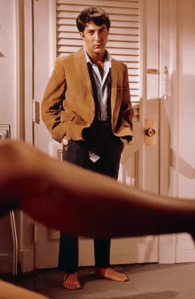
Hoffman doing ok in corduroy

I recall variously being described as a geography teacher and librarian after my mother, a woman with a keen eye for style, kitted me out in what would now be described as a chore style dark green corduroy jacket. It didn’t seem to matter nor occur to any of its deprecators that celebrities from Paul Newman and Robert Redford to Mick Jagger, Elton John and The Beatles, (the Fab Four once celebrated  for ‘saving the British cord industry’) are all considered legendary corduroy aficionados. Most of them, like Dustin Hoffman in The Graduate, photographed in geography teacher green or brown corduroy. Jagger the exception photographed by Cecil Beaton in a pair of pink – think Barbie – cords. 

The Daily Telegraph, a newspaper not known for its cutting edge fashion sense (believe it or not I once wrote a monthly DIY column for it, not in corduroy) once described corduroy as the fabric of “left leaning polytechnic lecturers in sandals,” which sounds pretty cool although I suspect wasn’t meant to be. Although I do a bit understand the teacher/professor connection having been taught history  by an unkempt such a person with curly black Peter Green locks. He wore a lot of corduroy beneath his professorial black cape, slacks and jacket in different colours, teamed with dark blue shirts that he wore, when asked, “because they don’t show the dirt and the trousers don’t need pressing.” Not a strong case for corduroy I grant you merely underlining a perception of dusty libraries and slovenly professor with  elbow patches.” In fact, I adore elbow patches but that’s another story. 

The other inexplicable beef with corduroy is noise. That’s right – sound. You know, loud and distracting. I’ve had issues with nylon anoraks, a swishing fish tail parka and steel toe caps but I can put my hand on my heart and confess I’ve never heard any sound, tone or decibel from any of my corduroy garments – jackets, jeans, shirts or cap. 

Among the litany of magazines and periodicals warning on the do’s and don’t of corduroy GQ says “despite the verticality of the stripes corduroy will make you look like a sausage and the sound of your legs rubbing together may invite violence on your person.”

Not in all the weeks of I’ll never remember what’s his name’s name standing before us and waving his arms and writing on the blackboard neither I nor either of the two remaining school friends I have from that time can recall any noise emanating from his unclean and un-ironed corduroy gear.

Returning to the baseball cap for a paragraph another of those we all hate corduroy article states that under no circumstances should anyone wear a corduroy hat. Mine, Kim bought from TKMaxx so it was cheap. It’s a Ralph Lauren, the US label that makes terrific corduroy clothes with that Ivy League cut; an English gentleman look with a street twist. 

So what is corduroy anyway? Where is it from, and how did it acquire its name? There is an apocryphal tale that it is indeed French, aka cord du roi, the cord of the king. Wishful thinking perhaps by corduroy makers hoping to get beyond class prejudice. It has a more melodious name in Italy where it is velluto a coste, that of course translates into velvet with a rib in a country where  fashion designers can’t get enough of the ribbed textile with an endemic velvety weft. 

The coarse ancestor of corduroy was a sturdy workwear known as duroy emerging in the UK in the 18th century and known in European textile circles as the Manchester or Bedford cloth. It did and does comprise rows of tufted wales –  a term used for rows in knitting. Early versions of wales were painstakingly cut by hand and thereafter brushed to raise a pile. The number of wales per inch dictates the size of the cord; the lower the number of wales per inch the thicker the cord. A low number of fat wales is sometimes known as ‘elephant’ cord and is strictly casual whereas a high number of wales are found in finer ‘needle’ cord for a smarter appearance. I am strictly an ‘elephant’ and rhino (!) corduroy man. 

It’s been up and down for corduroy since first and briefly being taken seriously in the 1960s. Peaking in the 1970s it enjoyed a reboot in the 1990s when Pearl Jam recorded a tune entitled, you guessed it, Corduroy and Pulp’s Jarvis Cocker, a Top 40 epitome of a left leaning polytechnic lecturer, was seldom seen out of it, the fabric!

For all the mocking it being the poor man’s velvet I like duroy because in my book it is the most smart/casual fabric a man can wear with the shifting nap but none of the dressiness of the costlier fabric it is meant to imitate. Clobber with an endemic softness that bestow the wearer with smartness devoid of stuffiness. A cut above casual and a snip below salary man that, like denim, really does improve with wear and age. It took my fourth corduroy jacket,  a Stephanano Veneziani bought in Florence ( dark brown, mid-wale, three button with sewn in back belt and single vent) all of five years to sag into that comfortable body hugging droop I love but which I suspect the fashion writers despair of. My newest (my seventh to date), also Italian and also brown, has chunkier wales with a saggy worn in smart but casual style sewn into it. I think. 

In any doubt that corduroy is back, for however long, take a look at this year’s Brunello Cucinelli collection with an ocean of wales of every size, weft and colour. The Guardian now proclaiming it’s ‘comfy, cosy and clever, Gentleman’s Journal declaring corduroy is officially cool again and Harper’s Bazaar touting corduroy jackets, baseball caps and even combat boots. 

If you like your clothes to be a talking point – look no further.

Posted in media, shopping, Uncategorized | Leave a comment

Families – who needs ’em?

You know that feeling, when you think you’ve heard it all and then…you realise you haven’t got anywhere close. I had such an experience the other morning on a chill Harlyn Beach having been introduced to a woman in a red anorak with a small dog who used to be a friend of my Padstow chum John. She’s a nurse who works nights in a hospital somewhere on the peninsula and what she told Kim left the pair of us wondering what kind of people can do such a thing?

She spoke of a  patient who has been on her ward for some weeks having successfully come through cancer surgery. It had looked bleak the day he’d been admitted but a combination of NHS expertise, his inner strength and determination combined with a fair share of good luck brought him through to the delight of our wind blown informant and her colleagues.

You can imagine how his family must have felt, the father and grandfather formerly upon the brink now, against all the odds in remission, enjoying a new lease of life for a new year? So pause because whatever you might have thought is wrong on every level. While the patient was recovering from the surgery his family contacted the council to inform it that their late father and grandfather to others would not be requiring his council home any more and the front door key would be returned forthwith. And it didn’t stop there. Having effectively made the patient homeless his family, presumably over an unspecified number of days during the season of goodwill disposed of all of his possessions, every last thing said our informant with the expression of one uncertain of the principles many of us hold dear , some items sold for profit perhaps (if not why?) with the remains donated to charity. 

She went on to explain that her patient was now homeless with his remaining worldly possessions comprising of nothing more than the clothes he’d been wearing when admitted to hospital at the back end of last year. Was her patient speaking with to family? She couldn’t be sure but had heard from colleagues that some of his relatives had been seen on the ward, presumably unhappy with the accomplishment of modern oncology.

If you’re struggling to get your head around that unsettling glimpse of the dark side of humanity listen on.

“We’re in what we call the ‘dumping season’ said our nurse perhaps used to maintaining an enigmatic non partisan expression when all decency is collapsing around her and her colleagues. “It’s in the run up to Christmas. Families bring elderly relatives to A&E and just leave them.”

Due to illness?

“No. Just elderly and a bit slower and a bit less able. It’s as if they don’t want to have to bother with them when there are other things to do.” Sort of like, Christmas dinner and parties? She nodded and almost grimaced. 

These older family members are left in hospital ”bed blocking” until a care package is established for them. 

These families, I speculate choosing my words carefully, could they be described as the financially oppressed working class? Not at all. The dumping season applies to families across the economic and cultural spectrum.

“They are all white. It might be because English families don’t value family togetherness as much as other cultures where the elderly are respected.

“It’s one of the reasons the NHS is under such pressure. All those elderly people dumped on us are bed blocking taking up places we would otherwise use for patients who need them.”

I asked what ‘dumping’ and the  patient whose family has left him homeless and bereft does for her faith in human nature? She offers a wan smile and walks off to retrieve her little dog’s ball. 

Posted in gone west, health, Uncategorized | Leave a comment

another one bites the dust

There aren’t many trips to the local supermarket when I want no need to sit down but today was one such a day. I had popped in for a couple of essentials for a trip away, toothpaste and dark tan shoe polish; items as essential as the air we breathe. 

Toothpaste because I have a thing about dentists, especially since two fifteen hundred pound implants installed by a former cruiser liner crooner turned odontologist fell out (I have them in a cardboard box, trophies of failure) and another in Newquay who despite my insistence which tooth was causing me pain extracted the wrong one, I go out of my way, via extended brushing sessions, to avoid ever seeing another one ever again. 

Equally important as my perfectly formed if rather small remaining teeth is the patina on my footwear. After all, a well shined pair shoes are the cut and ‘tell’ of a chap’s jib. Memes that says more about the wearer than any amount of emojis or social media likes. 

For as long as I can remember, long before the internet and decimalisation in a time when people used maps and stood up for the national anthem in cinemas, well polished shoes were obligatory and, dare I say, normal. Buffed shoes a badge of European civilisation, a glimmering link between trouser hem and whatever it is down there. It’s why so many WWll films depicted sergeant majors demanding squaddies see their reflection in their burnished toe caps and I like many others of my generation lined up in the school playground for the morning shoe inspection. We’d even polish our football boots; wash and rinse them, polish them and finally apply Dubbin. 

For many the ritual of shoe cleaning has been as much an essential function of growing up, a part of a chap’s life equipment, as forging one’s age on the bus pass so as to get into A certificate films and lying to railway ticket inspectors about the station you embarked from. We just did it, no questions asked.

There was a sticky phase when cool teenage footwear dropped off the scale comprising clogs, high top baseball boots and something called The Rambler with a soft sole and uppers stitching in a loop along one side. Kim called them my “omelettes” and I could see why. Liam Gallagher, the former Oasis and icon of casual dressing has lent his name and enthusiasm, “now I’ve got my own version I’m buzzing…”, to a new retro range of Clark’s  Ramblers. Only 1970s mods, the dapperest of rude soul boys and girls, resisted the move towards unpalatable and unpolished footwear concocting the now hallowed pairing of turned up ‘red stitching’ Levi 501s with ox blood Bass Weejun loafers. 

The finest compliment I’ve received came from a commissioning editor on the London Evening Standard. I was to write a piece about grandiose Victorian pubs and having discussed the length and tone of the article there was just one question remaining unanswered. What would he pay me? He thought for a moment and said “I was looking at your shoes and I thought you’d be expensive.” For the record I was shod that day with a pair of light tan Florsheim wing tip brogues bought from London’s premier Mod outfitters J.Simons, then of Covent Garden but nowadays Marylebone. I can even remember the day I bought them standing in the shop doorway whereupon John Simons the owner greeted me warmly and asked what I was looking for? I replied shoes at upon which he glanced down at my black wing tip brogues and aghast guessed fairly accurately that I bought them some 20 years before. Re-soled numerous times and buffed to a dazzle and still in perfect shape thanks to another minor obsession, shoe trees. A local cobbler, a dour expert if ever there was one, remarked repeatedly that my shoes look as though they are stored with shoe trees in them, spoken in the tone of someone just informed their car has failed an MoT.  Shoe trees hark back to a time when people didn’t own many pairs of shoes extending their usable lives with regular care, maintenance and storage. I recall my father owned just two; black for work and brown weekends. They’re cheap now and not worth the time and care.

I have only ever had one street shoeshine it was in the Plaza de Armas, Havana while researching Up In Smoke. I seem to recall I wore tan loafers the shoeshiner selling me a Hoyo de Monterrey that was probably fake. I made a point of not dropping the ash on his work.

before and after – from Shiners: The Art Of The Shine

 A world of boot blacks and shoe shines depicted in film from the 1946 Shoeshine a story about a couple of street lads in Napoli buffing up to buy a horse to Shiners: The Art Of The Shine, a documentary from 2017 tracing the art of the shine across the globe. My favourite line in it from a shoe shiner  in the Big Apple who hustling a group of suited and booted Wall Street types calls out, “look at those dirty shoes. How long you gonna ignore that?” Here in the UK Londonshoeshineevents is a company specialising in corporate and exhibition shoe cleaning. 

We have mixed opinions of the Blair government but what most right minded people agree upon is that then as of now after more than a decade of the tories a Labour administration was well overdue. The Red Wedge became a sort of ‘youf’ alignment of writers, radio presenters, musicians and other creative media types planning ways to make a Labour win ever more likely. Paul Weller was the headliner at the meeting I attended in south London where one of the attendees at the 20 something strong table of activists suggested to general approval that young Labour types should make an effort to keep their shoes shined and see off that easy to denigrate image of scruffy socialists. We each looked at the footwear of those on the other side of the oval table tucking one trainer behind the other. They ought to have had a look at the How To Polish Leather Shoes film on the Kiwi polish website.

I am beyond instruction promotions so imagine how my heart sank when the woman at the supermarket explained that there isn’t any call for shoe polish nowadays. Who did I know that cleaned their shoes? 

She had a point and could I please have a chair?

For Nobby From Balham – a shoe polish sort of fella

Posted in shopping, Uncategorized | Leave a comment

an end to paper!

After my experiences this year I have come to realise that frankly I can’t afford to go paper free. Like the next man or woman I care about the planet so much so that I am mulling over electric cars and have come to the conclusion I can live without a tropical suntan if humanity is safe for another 1000 years.

But – if I’d not had paper utility bills to pour over when I ought to have been having a life I would be something to the tune of £250 worse off. And conceivably a whole lot more better off but for the bills I am presently pouring over that are so unbelievably complicated I may never be able to argue a route to satisfaction. More of that later. 

Utilities and banks do a job selling us the concept of a paper free life in joyously environmentally friendly terms. Every which way we turn or click there’s smiling sunny bucolic world of carefree families embracing their ignorance for the bigger picture of climate change. It’s clear that each of us can do our bit by just doing away with paper. Think how cooler the world would be without a generation of fish ’n chips wrapped in newspaper and all those unenvironmental utility bills and bank statements. And to push those Luddites on the uncertain-what-to-do shelf over the edge they’ll charge them postage. Put like that  is it any wonder increasing numbers are choosing to be paper free and putting their trust in the due diligence and transparency of utility firms and banks. 

The flip side of paper free is the issuers can feel safe that most of us we the customer simply won’t have the time to dig into the email invoice beyond how much it is. Who looks at emails anyway unless they’re from hot babes or prize givers with the latest iPhones and bitcoin to give away?

Not having smart meters in The Red House requires someone to regularly read them and because the daily standing charge for some reason doesn’t cover the cost of a man with a meter box key and a tablet I’ve taken on board that responsibility and this despite the fact that the majority of our bills for gas, electricity and water state ‘we read’, an error or a bare faced lie depending on how you look at it. In nine years i can count on one hand the times I’ve let someone it to read the meters around the back behind a locked gate. One utility company didn’t believe me when I entered the reading on its website. The phrase on the screen read ‘…not what we expected,” due to the fact that my reading produced a figure less than the one they’d fabricated.

Being kind to the planet BT began charging for paper bills some time ago although they didn’t tell the marketing department to stop posting special offer letters. It also stopped ‘line rental savers’ deal and so as not to swindle customers like me any credit left on the bill – that I’ve hand to print out because BT is saving the planet – would come off subsequent online only bills perhaps in the hope that nobody would notice a change in how the bills are assessed unless you’re a no hoper like me who prefers bill inspection to daytime tv. It took a long time on the landline (remember them?) but eventually I

I was reaccredited the money from the line rental saver that had mysteriously disappeared.

The ‘unbelievably complicated bill’, owing to the language employed by South West Water being so unsparingly impenetrable, pertains to the odd fact that for the past seven years the water we have drawn from the mains ie usage is every time exactly the same amount in cubic metres as we pour into the sewer ie sewerage. Never close or thereabouts but precisely the same on each bill regardless of how much water is used to wash the car every two to three weeks or how much is used to irrigate Kim’s kitchen garden. Both filter water down to the subsoil and water table and don’t go anywhere near the sewers.

Of course trying to speak with someone at a utility is no easy task and South West Water is no exception. I learnt years ago not to talk to automated machines, better to wait until the ‘old git on the line’ alarm bells ring. Sadly, I think increasingly the utilities are wising up to that old git trick and just hang up. Frankly it all took so long I don’t know how I found an email address and forwarded my query. How can they know the usage and sewerage are the same?

The initial response stated that “sewerage charges are based on the amount of water measured by the meter” and that “a 5% allowance is given as standard.”

Confused? I was. How does the water meter measure the sewerage I asked for clarification. I wish I hand’t bothered.

Someone different replied, “when calculating what you should be charged for sewerage services, we first calculate the full monetary cost by multiplying the cubic metres (m3) of water you’ve used by our unit charge for sewerage. We then remove 5% of the total monetary cost, not the actual consumption in cubic metres – this is why your bills will never show that you’ve used fewer m3 in sewerage compared to clean water.”  

It doesn’t matter the usage and sewerage charged have been identical for six years; sorry about the planet but I have the bills. This is a work in progress. 

The point being that none of the false readings, the unconventional accounting or the supposed usage would have come to light without bills, and I’ve been thinking about these and the planet and how to square the circle and what I’ve come up with is this. All that recycled paper the council carries away every couple of weeks or so instead of being incinerated or ‘recycled’ in landfill or shipped out to parts of Africa where they can’t get enough of unwanted paper and stuff could actually properly be recycled and used for – you got it, utility bills and envelopes. 

Posted in shopping, Uncategorized | Leave a comment

The case for porkies – Harlyn House


I knew I was going to like this place the second I heard Little Feat’s Dixie Chicken coming over the tannoy; one of several notable firsts at The Pig. That’s not entirely true because I knew I was going to like this place – a lot – the moment I stepped through the front door into a reception of verdant darkness and elegantly faded period embellishments. A room decorated from floor to the heavily moulded ceiling in intimate forest green, with framed maps, a draughtsman’s chest, gilded sconces and a wood burning stove. A clink of glasses and a sense of vintage bacchanalian delights from an adjoining bar. 

Harlyn House (aka The Pig – hotel, restaurant, bar) may be the finest, most liveable and tasteful property it’s been my pleasure to spend some time in. Kim and I were there for dinner, a small celebration, being led along a low serpentine corridor passing a wine store and a private dining room and a staircase to the hotel rooms above culminating at a dark studded door at the far end opening to reveal an equally verdant snug with another wood burner, wing chairs, breakfront curled occassional tables and portraits of thick set men.

One of a chain of Pigs the Harlyn branch opened in 2020 located almost at the confluence of the Trevose Head peninsula with Harlyn Bay and Constantine beaches to the north east and west respectively visible from various parts of the property inside and out. Despite praise from friends Kim hadn’t wanted to see for herself having not taken a liking to the name. And then there was the ghost of Harlyn House, once the home of the High Sheriff of Cornwall, that our friend Kathleen Swan had spoken often of, all of a shiver. One of the young staff said he had heard as much. 

We’d arrived a little earlier than our dining reservation slot intent upon savouring the surroundings. Kim enjoyed a first glass from a bottle of Sancerre while I ordered my usual vodka martini straight up with a twist; a benchmark established by Dukes’ Gilberto Preti. To both my surprise and delight it was delicious; chilled, aromatic and with a punch that made me content to remain in that room all evening listening to Robert Palmer’s Sneakin’ Sally Through The Alley and tunes from Van Morrison and Lou Reed.

Looking at the menu the first thing that struck me were the fish fingers and Rubies ketchup. Fish fingers are, along with prawn cocktail, broccoli and anchovy pasta, palmiers and eccles cakes, one of my Desert Island dishes; another first for a posh restaurant. How could I resist the small plate appetiser at £4.95. The other thing that struck me was just how many vegetarian dishes are on the principal 25 Mile Menu that sources all ingredients from within that radius of The Pig. Sixteen dishes in all, enough to satisfy most 21st century vegetarians, and pescatarians. Among them a red celery risotto, Padstow crab salad, hake, monkfish and courgettes with pesto and pickled mayonnaise. I’m guessing the New Zealand spinach isn’t shipped in but grown in The Pig’s kitchen garden that yielded some of the tastiest new potatoes Kim and I have ever fought over. In short supply was anything remotely porcine.

I think the room we were sat in is called The Skullery with the look and feel of a grand country estate store room. More slate on the floor, exposed rafters and at picture rail height shelves heavy with pickles.

the skullery

  There are French doors at either end that I suspect would have been open in July but for the torrential rain. Nothing matches and that only added to the charm. None of the floral bone china plates on our table originated from the same dinner service.  The dining chairs too are mix and match but that’s what makes this place perfect. Just a pity some diners felt the need to sit down in their beachwear. Men in restarants in shrts shouldn’t be allowed. But it’s what the well healed do; turn up at a place where dinner is easily over £100 a head dressed like a rough sleeper. It’s nothing new. I recall my first upgrade to first class on a BA flight. It was suggested I look smart at check-in. Duly done in a Cerruto Prince of Wales double breasted suit I turned out to be the only male in first class in trousers; it was – so, you’re the upgrade!

dining room – forget the food look at the ceiling

In addition to the fish fingers we selected Kernow Fried Graffiti Cauliflower that turned out to be a sort of delicious crispy cauliflower bhaji. The sunstripe courgettes (good but not as good as the cauliflower) and for mains Middle White Pork Loin with hispi cabbage and gooseberry sauce £27.00. Under advice from the waitress we supplement the mains with crunch buttered greens and those superb new potatoes from Colwyn Farm outside Fowey. The portions of pork were prodigious. I am doubtless behind the times but not that fond of pork when it’s runny and pink inside. Kim neither so Asta ate well for the subsequent couple of days. Perhaps either the monkfish or gurnard with crab butter next time.

Despite pulling back from the pork we were both quite full and elected to forgo desert tempting as garden loganberries with honey set cream and cinder toffee or Rachel’s gooseberry and almond tart with clotted cream and icecream might be. Heaping praise upon the young bar person (!) India for my martini we discovered that we can in future come to the bar and not have a meal. I could order another martini and a couple of plates of those fish fingers and sink gladly back into the 15th century – Pig style. A little Dixie Chicken and Tennessee lamb wouldn’t go amiss either. 

The Pig at Harlyn Bay and Lobster Shed (fairweather seafood in a rural setting in the grounds), Padstow, Cornwall, PL28 8SQ 01841 532785  www.thepighotel.com

Posted in gone west, Seashores, travel, Uncategorized | Leave a comment