Families – who needs ’em?

You know that feeling, when you think you’ve heard it all and then…you realise you haven’t got anywhere close. I had such an experience the other morning on a chill Harlyn Beach having been introduced to a woman in a red anorak with a small dog who used to be a friend of my Padstow chum John. She’s a nurse who works nights in a hospital somewhere on the peninsula and what she told Kim left the pair of us wondering what kind of people can do such a thing?

She spoke of a  patient who has been on her ward for some weeks having successfully come through cancer surgery. It had looked bleak the day he’d been admitted but a combination of NHS expertise, his inner strength and determination combined with a fair share of good luck brought him through to the delight of our wind blown informant and her colleagues.

You can imagine how his family must have felt, the father and grandfather formerly upon the brink now, against all the odds in remission, enjoying a new lease of life for a new year? So pause because whatever you might have thought is wrong on every level. While the patient was recovering from the surgery his family contacted the council to inform it that their late father and grandfather to others would not be requiring his council home any more and the front door key would be returned forthwith. And it didn’t stop there. Having effectively made the patient homeless his family, presumably over an unspecified number of days during the season of goodwill disposed of all of his possessions, every last thing said our informant with the expression of one uncertain of the principles many of us hold dear , some items sold for profit perhaps (if not why?) with the remains donated to charity. 

She went on to explain that her patient was now homeless with his remaining worldly possessions comprising of nothing more than the clothes he’d been wearing when admitted to hospital at the back end of last year. Was her patient speaking with to family? She couldn’t be sure but had heard from colleagues that some of his relatives had been seen on the ward, presumably unhappy with the accomplishment of modern oncology.

If you’re struggling to get your head around that unsettling glimpse of the dark side of humanity listen on.

“We’re in what we call the ‘dumping season’ said our nurse perhaps used to maintaining an enigmatic non partisan expression when all decency is collapsing around her and her colleagues. “It’s in the run up to Christmas. Families bring elderly relatives to A&E and just leave them.”

Due to illness?

“No. Just elderly and a bit slower and a bit less able. It’s as if they don’t want to have to bother with them when there are other things to do.” Sort of like, Christmas dinner and parties? She nodded and almost grimaced. 

These older family members are left in hospital ”bed blocking” until a care package is established for them. 

These families, I speculate choosing my words carefully, could they be described as the financially oppressed working class? Not at all. The dumping season applies to families across the economic and cultural spectrum.

“They are all white. It might be because English families don’t value family togetherness as much as other cultures where the elderly are respected.

“It’s one of the reasons the NHS is under such pressure. All those elderly people dumped on us are bed blocking taking up places we would otherwise use for patients who need them.”

I asked what ‘dumping’ and the  patient whose family has left him homeless and bereft does for her faith in human nature? She offers a wan smile and walks off to retrieve her little dog’s ball. 

Posted in gone west, health, Uncategorized | Leave a comment

another one bites the dust

There aren’t many trips to the local supermarket when I want no need to sit down but today was one such a day. I had popped in for a couple of essentials for a trip away, toothpaste and dark tan shoe polish; items as essential as the air we breathe. 

Toothpaste because I have a thing about dentists, especially since two fifteen hundred pound implants installed by a former cruiser liner crooner turned odontologist fell out (I have them in a cardboard box, trophies of failure) and another in Newquay who despite my insistence which tooth was causing me pain extracted the wrong one, I go out of my way, via extended brushing sessions, to avoid ever seeing another one ever again. 

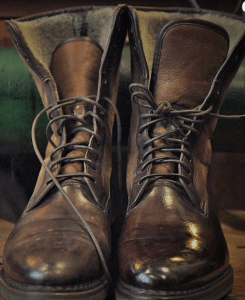
Equally important as my perfectly formed if rather small remaining teeth is the patina on my footwear. After all, a well shined pair shoes are the cut and ‘tell’ of a chap’s jib. Memes that says more about the wearer than any amount of emojis or social media likes. 

For as long as I can remember, long before the internet and decimalisation in a time when people used maps and stood up for the national anthem in cinemas, well polished shoes were obligatory and, dare I say, normal. Buffed shoes a badge of European civilisation, a glimmering link between trouser hem and whatever it is down there. It’s why so many WWll films depicted sergeant majors demanding squaddies see their reflection in their burnished toe caps and I like many others of my generation lined up in the school playground for the morning shoe inspection. We’d even polish our football boots; wash and rinse them, polish them and finally apply Dubbin. 

For many the ritual of shoe cleaning has been as much an essential function of growing up, a part of a chap’s life equipment, as forging one’s age on the bus pass so as to get into A certificate films and lying to railway ticket inspectors about the station you embarked from. We just did it, no questions asked.

There was a sticky phase when cool teenage footwear dropped off the scale comprising clogs, high top baseball boots and something called The Rambler with a soft sole and uppers stitching in a loop along one side. Kim called them my “omelettes” and I could see why. Liam Gallagher, the former Oasis and icon of casual dressing has lent his name and enthusiasm, “now I’ve got my own version I’m buzzing…”, to a new retro range of Clark’s  Ramblers. Only 1970s mods, the dapperest of rude soul boys and girls, resisted the move towards unpalatable and unpolished footwear concocting the now hallowed pairing of turned up ‘red stitching’ Levi 501s with ox blood Bass Weejun loafers. 

The finest compliment I’ve received came from a commissioning editor on the London Evening Standard. I was to write a piece about grandiose Victorian pubs and having discussed the length and tone of the article there was just one question remaining unanswered. What would he pay me? He thought for a moment and said “I was looking at your shoes and I thought you’d be expensive.” For the record I was shod that day with a pair of light tan Florsheim wing tip brogues bought from London’s premier Mod outfitters J.Simons, then of Covent Garden but nowadays Marylebone. I can even remember the day I bought them standing in the shop doorway whereupon John Simons the owner greeted me warmly and asked what I was looking for? I replied shoes at upon which he glanced down at my black wing tip brogues and aghast guessed fairly accurately that I bought them some 20 years before. Re-soled numerous times and buffed to a dazzle and still in perfect shape thanks to another minor obsession, shoe trees. A local cobbler, a dour expert if ever there was one, remarked repeatedly that my shoes look as though they are stored with shoe trees in them, spoken in the tone of someone just informed their car has failed an MoT.  Shoe trees hark back to a time when people didn’t own many pairs of shoes extending their usable lives with regular care, maintenance and storage. I recall my father owned just two; black for work and brown weekends. They’re cheap now and not worth the time and care.

I have only ever had one street shoeshine it was in the Plaza de Armas, Havana while researching Up In Smoke. I seem to recall I wore tan loafers the shoeshiner selling me a Hoyo de Monterrey that was probably fake. I made a point of not dropping the ash on his work.

before and after – from Shiners: The Art Of The Shine

 A world of boot blacks and shoe shines depicted in film from the 1946 Shoeshine a story about a couple of street lads in Napoli buffing up to buy a horse to Shiners: The Art Of The Shine, a documentary from 2017 tracing the art of the shine across the globe. My favourite line in it from a shoe shiner  in the Big Apple who hustling a group of suited and booted Wall Street types calls out, “look at those dirty shoes. How long you gonna ignore that?” Here in the UK Londonshoeshineevents is a company specialising in corporate and exhibition shoe cleaning. 

We have mixed opinions of the Blair government but what most right minded people agree upon is that then as of now after more than a decade of the tories a Labour administration was well overdue. The Red Wedge became a sort of ‘youf’ alignment of writers, radio presenters, musicians and other creative media types planning ways to make a Labour win ever more likely. Paul Weller was the headliner at the meeting I attended in south London where one of the attendees at the 20 something strong table of activists suggested to general approval that young Labour types should make an effort to keep their shoes shined and see off that easy to denigrate image of scruffy socialists. We each looked at the footwear of those on the other side of the oval table tucking one trainer behind the other. They ought to have had a look at the How To Polish Leather Shoes film on the Kiwi polish website.

I am beyond instruction promotions so imagine how my heart sank when the woman at the supermarket explained that there isn’t any call for shoe polish nowadays. Who did I know that cleaned their shoes? 

She had a point and could I please have a chair?

For Nobby From Balham – a shoe polish sort of fella

Posted in shopping, Uncategorized | Leave a comment

an end to paper!

After my experiences this year I have come to realise that frankly I can’t afford to go paper free. Like the next man or woman I care about the planet so much so that I am mulling over electric cars and have come to the conclusion I can live without a tropical suntan if humanity is safe for another 1000 years.

But – if I’d not had paper utility bills to pour over when I ought to have been having a life I would be something to the tune of £250 worse off. And conceivably a whole lot more better off but for the bills I am presently pouring over that are so unbelievably complicated I may never be able to argue a route to satisfaction. More of that later. 

Utilities and banks do a job selling us the concept of a paper free life in joyously environmentally friendly terms. Every which way we turn or click there’s smiling sunny bucolic world of carefree families embracing their ignorance for the bigger picture of climate change. It’s clear that each of us can do our bit by just doing away with paper. Think how cooler the world would be without a generation of fish ’n chips wrapped in newspaper and all those unenvironmental utility bills and bank statements. And to push those Luddites on the uncertain-what-to-do shelf over the edge they’ll charge them postage. Put like that  is it any wonder increasing numbers are choosing to be paper free and putting their trust in the due diligence and transparency of utility firms and banks. 

The flip side of paper free is the issuers can feel safe that most of us we the customer simply won’t have the time to dig into the email invoice beyond how much it is. Who looks at emails anyway unless they’re from hot babes or prize givers with the latest iPhones and bitcoin to give away?

Not having smart meters in The Red House requires someone to regularly read them and because the daily standing charge for some reason doesn’t cover the cost of a man with a meter box key and a tablet I’ve taken on board that responsibility and this despite the fact that the majority of our bills for gas, electricity and water state ‘we read’, an error or a bare faced lie depending on how you look at it. In nine years i can count on one hand the times I’ve let someone it to read the meters around the back behind a locked gate. One utility company didn’t believe me when I entered the reading on its website. The phrase on the screen read ‘…not what we expected,” due to the fact that my reading produced a figure less than the one they’d fabricated.

Being kind to the planet BT began charging for paper bills some time ago although they didn’t tell the marketing department to stop posting special offer letters. It also stopped ‘line rental savers’ deal and so as not to swindle customers like me any credit left on the bill – that I’ve hand to print out because BT is saving the planet – would come off subsequent online only bills perhaps in the hope that nobody would notice a change in how the bills are assessed unless you’re a no hoper like me who prefers bill inspection to daytime tv. It took a long time on the landline (remember them?) but eventually I

I was reaccredited the money from the line rental saver that had mysteriously disappeared.

The ‘unbelievably complicated bill’, owing to the language employed by South West Water being so unsparingly impenetrable, pertains to the odd fact that for the past seven years the water we have drawn from the mains ie usage is every time exactly the same amount in cubic metres as we pour into the sewer ie sewerage. Never close or thereabouts but precisely the same on each bill regardless of how much water is used to wash the car every two to three weeks or how much is used to irrigate Kim’s kitchen garden. Both filter water down to the subsoil and water table and don’t go anywhere near the sewers.

Of course trying to speak with someone at a utility is no easy task and South West Water is no exception. I learnt years ago not to talk to automated machines, better to wait until the ‘old git on the line’ alarm bells ring. Sadly, I think increasingly the utilities are wising up to that old git trick and just hang up. Frankly it all took so long I don’t know how I found an email address and forwarded my query. How can they know the usage and sewerage are the same?

The initial response stated that “sewerage charges are based on the amount of water measured by the meter” and that “a 5% allowance is given as standard.”

Confused? I was. How does the water meter measure the sewerage I asked for clarification. I wish I hand’t bothered.

Someone different replied, “when calculating what you should be charged for sewerage services, we first calculate the full monetary cost by multiplying the cubic metres (m3) of water you’ve used by our unit charge for sewerage. We then remove 5% of the total monetary cost, not the actual consumption in cubic metres – this is why your bills will never show that you’ve used fewer m3 in sewerage compared to clean water.”  

It doesn’t matter the usage and sewerage charged have been identical for six years; sorry about the planet but I have the bills. This is a work in progress. 

The point being that none of the false readings, the unconventional accounting or the supposed usage would have come to light without bills, and I’ve been thinking about these and the planet and how to square the circle and what I’ve come up with is this. All that recycled paper the council carries away every couple of weeks or so instead of being incinerated or ‘recycled’ in landfill or shipped out to parts of Africa where they can’t get enough of unwanted paper and stuff could actually properly be recycled and used for – you got it, utility bills and envelopes. 

Posted in shopping, Uncategorized | Leave a comment

The case for porkies – Harlyn House


I knew I was going to like this place the second I heard Little Feat’s Dixie Chicken coming over the tannoy; one of several notable firsts at The Pig. That’s not entirely true because I knew I was going to like this place – a lot – the moment I stepped through the front door into a reception of verdant darkness and elegantly faded period embellishments. A room decorated from floor to the heavily moulded ceiling in intimate forest green, with framed maps, a draughtsman’s chest, gilded sconces and a wood burning stove. A clink of glasses and a sense of vintage bacchanalian delights from an adjoining bar. 

Harlyn House (aka The Pig – hotel, restaurant, bar) may be the finest, most liveable and tasteful property it’s been my pleasure to spend some time in. Kim and I were there for dinner, a small celebration, being led along a low serpentine corridor passing a wine store and a private dining room and a staircase to the hotel rooms above culminating at a dark studded door at the far end opening to reveal an equally verdant snug with another wood burner, wing chairs, breakfront curled occassional tables and portraits of thick set men.

One of a chain of Pigs the Harlyn branch opened in 2020 located almost at the confluence of the Trevose Head peninsula with Harlyn Bay and Constantine beaches to the north east and west respectively visible from various parts of the property inside and out. Despite praise from friends Kim hadn’t wanted to see for herself having not taken a liking to the name. And then there was the ghost of Harlyn House, once the home of the High Sheriff of Cornwall, that our friend Kathleen Swan had spoken often of, all of a shiver. One of the young staff said he had heard as much. 

We’d arrived a little earlier than our dining reservation slot intent upon savouring the surroundings. Kim enjoyed a first glass from a bottle of Sancerre while I ordered my usual vodka martini straight up with a twist; a benchmark established by Dukes’ Gilberto Preti. To both my surprise and delight it was delicious; chilled, aromatic and with a punch that made me content to remain in that room all evening listening to Robert Palmer’s Sneakin’ Sally Through The Alley and tunes from Van Morrison and Lou Reed.

Looking at the menu the first thing that struck me were the fish fingers and Rubies ketchup. Fish fingers are, along with prawn cocktail, broccoli and anchovy pasta, palmiers and eccles cakes, one of my Desert Island dishes; another first for a posh restaurant. How could I resist the small plate appetiser at £4.95. The other thing that struck me was just how many vegetarian dishes are on the principal 25 Mile Menu that sources all ingredients from within that radius of The Pig. Sixteen dishes in all, enough to satisfy most 21st century vegetarians, and pescatarians. Among them a red celery risotto, Padstow crab salad, hake, monkfish and courgettes with pesto and pickled mayonnaise. I’m guessing the New Zealand spinach isn’t shipped in but grown in The Pig’s kitchen garden that yielded some of the tastiest new potatoes Kim and I have ever fought over. In short supply was anything remotely porcine.

I think the room we were sat in is called The Skullery with the look and feel of a grand country estate store room. More slate on the floor, exposed rafters and at picture rail height shelves heavy with pickles.

the skullery

  There are French doors at either end that I suspect would have been open in July but for the torrential rain. Nothing matches and that only added to the charm. None of the floral bone china plates on our table originated from the same dinner service.  The dining chairs too are mix and match but that’s what makes this place perfect. Just a pity some diners felt the need to sit down in their beachwear. Men in restarants in shrts shouldn’t be allowed. But it’s what the well healed do; turn up at a place where dinner is easily over £100 a head dressed like a rough sleeper. It’s nothing new. I recall my first upgrade to first class on a BA flight. It was suggested I look smart at check-in. Duly done in a Cerruto Prince of Wales double breasted suit I turned out to be the only male in first class in trousers; it was – so, you’re the upgrade!

dining room – forget the food look at the ceiling

In addition to the fish fingers we selected Kernow Fried Graffiti Cauliflower that turned out to be a sort of delicious crispy cauliflower bhaji. The sunstripe courgettes (good but not as good as the cauliflower) and for mains Middle White Pork Loin with hispi cabbage and gooseberry sauce £27.00. Under advice from the waitress we supplement the mains with crunch buttered greens and those superb new potatoes from Colwyn Farm outside Fowey. The portions of pork were prodigious. I am doubtless behind the times but not that fond of pork when it’s runny and pink inside. Kim neither so Asta ate well for the subsequent couple of days. Perhaps either the monkfish or gurnard with crab butter next time.

Despite pulling back from the pork we were both quite full and elected to forgo desert tempting as garden loganberries with honey set cream and cinder toffee or Rachel’s gooseberry and almond tart with clotted cream and icecream might be. Heaping praise upon the young bar person (!) India for my martini we discovered that we can in future come to the bar and not have a meal. I could order another martini and a couple of plates of those fish fingers and sink gladly back into the 15th century – Pig style. A little Dixie Chicken and Tennessee lamb wouldn’t go amiss either. 

The Pig at Harlyn Bay and Lobster Shed (fairweather seafood in a rural setting in the grounds), Padstow, Cornwall, PL28 8SQ 01841 532785  www.thepighotel.com

Posted in gone west, Seashores, travel, Uncategorized | Leave a comment

It’s Good To Talk

Bob knows a thing…

The terrifying, if inevitable revelation that money expert Martin Lewis has been doppelganged, an online artificial intelligence (AI) likeness designed to defraud the millions of us who trust the media’s most respected economic adviser, was a wake up call to the slew of fake AI films heading our way. This the latest and to date most sophisticated means of persuading innocent internet users to hand money over to invisible criminals. 

The very next morning after the Martin Lewis story I received a spurious email; I was averaging around 80 scam emails a day earlier in the year. Bearing the familiar GOV.UK DVLA logo at the top of the page it stated that my bank had twice declined direct debit payments owing for a year of road tax. If I wasn’t such a cynical doomster I might have panicked hit the link and paid through the nose because my road tax is due for renewal fairly soon. Unless there is one hiding in my filing cabinet how internet criminals know this is beyond me?

I have my own rather limited system for spotting fraud emails that while not especially sophisticated – does the job. Without clocking on any highlighted nee coloured word or address in the email text and thereby inviting an invasion of not so delicious cookies and other unpleasant digital devices I position my laptop cursor directly above the very end of the sender’s name at the top of the email. Highlighting the name and clicking again reveals the actual email address it originated from. In this case an address without the slightest mention of anything to do with gov.uk. With the true address exposed  and the box now open there is the opportunity to ‘block’ the contact/sender. This works for some scam addresses but as we know criminals possess the annoying ability of always being one step ahead. Many scam emails now have addresses with multiple digits in them. Block one and numerical code has the ability to self generate another number and address similar but not quite the same in order to get past the ‘block contact’ instruction.’. 

The crime both were aiming for is called Authorised Push Payment (APP) that last year yielded criminals, organised or otherwise, £1.2 billion according to UK Finance. In all probability the amount stolen by this means is almost certainly much higher but banks are famously reluctant to own up to exactly how much an online world they are partly responsible for is really costing them and us. Another report puts the figure £1 billion higher. 

Infact I have a second method of decoding questionable emails from financial institutions. It’s in the verbiage that from the real deal, all my banks and credit card companies, is painfully pseudo hip. For instance when being reminded to pay my credit card bill the SMS text reads ‘heads up’! Clearly being down in the hood with the kids is the current on trend method of identifying with 21st century customers. But if ‘heads up’ isn’t bad enough how’s this for a reaction to the possibility that the outstanding bill had already been paid: ‘Nice one’. Or another bank that emailed ‘oops – that doesn’t seem right’ in response to a log in. Oops!

Digging deeper reveals that three quarters of all those APP frauds began on social media, the online platforms that I will have nothing to with but which millions trust and use and share gossip and family photographs and worryingly receive increasing amounts of what is deemed trustworthy news. Why? Because it’s free. Or is it?

It may not seem like a lot but 18% of APP frauds start via telecommunications; emails, SMS texts, phone calls. I received a call from someone who sounded if they were in a different solar system and claiming to be employed by Google Security warning me that someone had accessed my computer hard drive and if they weren’t gotten rid of asap would wreak financial havoc on me. All I had to do was allow him access to my computer. After initially going on with the spiel I called him my favourite swear word beginning with a c, told him to fuck off and hung up. He called back about 30 seconds later and told me “no, you’re the c***.” 

Then just last month I bought, or though I bought, a bicycle repair stand via a site on ebay. The ad featured the same bicycle stand photograph used by other sellers, only the one I selected, based on reviews, was much cheaper. Doh! When the package finally arrived my bicycle repair stand turned out to be a plastic parts shelf that fits on the stand, should I be lucky enough to own one. 

Would you believe it whilst writing this another scam email has dropped in stating that my bank account will be debited a lot of US dollars for – enjoy the irony – internet security.

It was announced this week that over 1000 railway ticket offices are to be closed thereby pushing all railway users, except those near city terminuses, to buy their tickets online. There are already fake bank, passport, pension, funeral, and of course DVLA car tax sites. How many fake train travel ticket sites can we expect? 

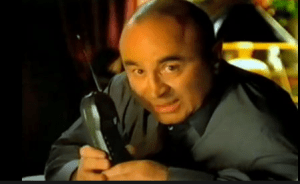
I don’t recall anyone being defrauded when they visited their local bank, or renewed their passport and car tax at the post office, or spoke on the telephone to work and pensions and funeral services. In the words of Bob Hoskins in those 1990s television advertisements for BT – “it’s good to talk.” 

So here’s a thought. High Streets are imploding all over the country because ever more of us are shopping and banking and investing and socialising and being ripped off online to the tune of £1.2 billion a year. So don’t do it. Do our shopping in shops! Don’t use free social media, make that call and drop friends a line; paper, envelope and stamp. Talk to people face to face in the high street, in the post office, in the shops, and in the pubs. Sounds like science fiction. Maybe, but who knows, it could catch on.

Posted in health, media, shopping, Uncategorized | Leave a comment

In The Darkness Of The Road – Hearts Aglow


One of my pleasures this past winter has been following twilight A roads with a sliver of magenta in the distant west and Weyes Blood (pronounced Wise Blood) sweeping aside all but the silent ocean, barren headlands and growing darkness. And In The Darkness Hearts Aglow a suitable title for both album and experience. A hint of that in what Weyes Blood, real name Natalie Mering, is maybe aiming to convey on track three Grapevine. Taking it’s name from the vertiginous mountain road east of Los Angeles and a breakdown (both car and I’m guessing relationship) in an old ghost town. Melancholy, uncertain and a long way from home. Sort of sums up the record. 

From the pulsating almost foreboding synthesiser introduction to several of the ten tracks the tempo barely shifts either side of a walking pace maintaining a sombre ambiance underpinned by a piano or guitar overlayed with multi-tracked vocals, more synths, and tubular bells. Mering playing most instruments barring strings. Think luscious alternative pop with a dash of ecclesiastical. Hardly your classic pedal-to-the-metal music.

A common comparison with Weyes Blood (pronounced Wise Blood, taken from the Flannery O’Connor novel and the name Mering adopted for herself when she was 15) is Karen Carpenter and while Mering’s vocals are far from as sweet as that legend’s there is the same delicacy, almost a nonchalance, but with a hint of The Beach Boys circa Pets Sounds. Particularly so as Children Of The Empire shifts a gear on the chorus with the introduction of finger snaps and distant bells. Imagine a rework of The Sloop John B. Is it a coincidence that early sessions for the album were at LA’s Sunset Boulevard studios where Pets Sounds was recorded. Mering and her co-producer Jonathan Rado eventually pulled out of those studios for fear of making a tribute album. There maybe some irony in there.

There is tragedy in her vocals that remain low key and under performed at all times. It’s as if she doesn’t want to overplay the grandeur of the production. A step back. Never more so than on what for many reviewers is the stand out track God Turn Me Into A Flower. It has the feel of a hymn with multi tracked vocals underpinned by a deeply resonant ecclesiastical organ. Fading into a bucolic avian landscape.

If all this appears gloomy and despondent – it isn’t, always. At times it feels and sounds like the audio equivalent of an epic movie, all landscapes and distances with the odd celestial choir thrown in for good measure. Think of the scene in Gladiator when Russell Crowe is running his hand across the wheat in the Champs-Elysees. It’s also unapologetically LA with references to the place they ‘got’ James Dean, a pier, and ferris wheel and candy cotton. Ambivalent with the American dream but anchored to its memes. 

She writes all the material here in addition to playing guitar, keyboards, bass and drums. Still in her thirties she is in tune with the seventies and is openly out of step with the digital app driven social media age, enthusiastic for a time of analogue contact and nostalgia. In 2019 she told US magazine The Believer “I miss so much. I miss going to the video store and renting a video. I miss calling a friend on a landline. I miss when people couldn’t break a plan because they had no way to get in touch with you, so they couldn’t leave you hanging and just send you a bullshit text.”

Nostalgia runs deep through Mering’s work. Procol Harum’s Whiter Shade Of Pale in her live set when a journalist from New Yorker magazine (how I discovered Weyes Blood) visited her at home with songbooks by Joni Mitchell and Elton John open on her grand piano. She talked of her admiration for Jim Morrison and The Doors and especially the tune Riders On The Storm. Echoes of that haunting panorama permeate her work.

Quite how the sound of And In The Darkness Hearts Aglo and its almost equally satisfying predecessor Titanic Rising evolved isn’t easy to comprehend. Her earlier forays into music were considered avant garde. This included phases with a homemade eight foot guitar, lead singer (aka ‘screamer’) with a grindcore band that involved exploding bags of fake blood, and a spell biting bits of fruit wrapped around the microphone. Don’t ask me. I have similar struggles with many of her lyrics that those more perceptive than I have interpreted. 

So – “living in the wake of overwhelming changes, we’ve all become strangers, even to ourselves. We just can’t help. We can’t see from far away, to know that every wave might not be the same. But it’s all a part of one big thing.” A song about the effects of the pandemic, maybe?

I’m hoping it will all make sense when I get to see Weyes Blood at the Colours Festival at the De La Warr Pavilion in Bexhill On Sea Saturday June 24. 

Until then all I know for certain is that Mering’s patient, swirling, melodic and panoramic pop/rock/folk is my go to drive music. I’ve told others and they agree. ‘It’s Not Just Me, It’s Everybody’. 

Posted in media, Uncategorized | Leave a comment

Endelienta – Amen to that

Times are definitely changing. Take a recent music concert in which I was expected to say, after a brief initiatory prayer, ‘amen’. 

The fact that I was in a church may have had something to do with the religious angle but I was holding a glass of Pino Grigio that I’d bought at the bar – yes, bar –  on the way in. And being required to pray for the “gift of music” (that had cost a very reasonable £12.00 a ticket) seemed, well, a bit odd.

And that wasn’t the only oddness. Either side of our seats three pews back from the crossing I could see women engrossed in knitting; one in a black sweater with the word believe embroidered across the front.

I was at St.Endellion Church, the home of Endelienta  Arts, a north coast crucible of music, literature and visual arts. And what a sublime venue it is too. Built in the 15th century, lofty and grand with carved stone pillars and arches, and tall ceiling buttresses the elegance and grace further enhanced by subtle spot lighting. A measured grandness and perfect acoustics augmented by medieval paintings in both transepts of the church and clerics in what at first glance appear to be golden Russian icons. In some ways St.Endellion feels more like an elaborate and ancient theatre than a church. 

Apart from smatterings of Beethoven and Elgar I confess I know little about classical music beyond things I’ve picked up from movie soundtracks and that doesn’t extend much further than Ennio Morricone. Thus when handed a programme of what to expect from flautist Jenny Dyson & Friends  (pianist Freddie Brown and cellist Bethan Lloyd) I didn’t, in truth, know what to expect. The three musicians have played with many of the the world’s very best, from the BBC Symphony Orchestra and the Royal Philharmonic to London Chamber Orchestra,  St.Martins in the Fields, and Klosters. Only when Dyson explained the theme of the event was to be passion did I glean something of what to expect. 

The first half began with an exuberant Flute Sonata No4 in C Major by Johann Sebastian Bach in complete contrast to the much lower and soulful next piece, Etude No4 from Argentinian Astor Piazzolla, a composer and bandoneon player perhaps better known for his jazz interpretations of tango. Bethan Lloyd stepped up to the microphone to explain that in her rush to drive down from London for the concert she had forgotten her shoes thence introducing a strangely angular piece for cello written by her father also a cellist. The half closed with the challenging Jet Whistle for Flute and Cello by Heitor Villa-Lobos that in its most pastural moments reminded me of those mesmerising Morricone orchestrations deployed just before someone dies. Dyson told us to listen out for the Jet Whistle when it came as if anyone could have missed it. Imagine a classical locomotive whistle – only louder and harsher. 

The second half began with Debussy’s Prelude a l’apres-midi d’un faune featuring Dyson and Brown. Think of those mysterious and swirling passages of music in Hitchcock’s 1940 classic Rebecca when Joan Fontaine steps tremulously down to the waterfront. Brown played solo piano for my favourite piece of the evening, Johannes Brahms Intermezzo, op, 118, no.2 a slow, delicate, tender and romantic piece that more than any other lived up to the the event’s promise of ‘passion’. And it could have ended there for me but did in fact come to a close with a sprightly three way affair from Phillippe Gaubert, 3 Aquarelles for Flute, Cello and Piano. 

The skill, enthusiasm and charm of those young musicians combined with an off-the-wall choice of music and loveliness of the ecclesiastical stage made for a memorable evening. 

Endelienta Arts, St.Endellion Church, PL29 3TP. 

Posted in gone west, Uncategorized | Leave a comment

Dirty Work

no more of this…

I am proud to announce that I have achieved another personal best: wearing the same shirt daily for nine days without washing, largely unstained and all but odourless. Previously I’d regularly managed four and half weekdays only changing into something fresh and uncreased towards the end of the fifth day for my traditional Friday night libation crawl. With the radio and press full of water shortage stories I decided to push the envelope and guided only by frequent sniffing and the occasional damp sponge wipe to remove spots of food (!) I saw out nine full days in the same indigo Ralph Lauren button down. Aired on a clothes hanger each night and smelling if not quite like a spring day and more like a warm damp autumn dusk it could have gone on longer were I not committed to attend a sad event and so changed it for a freshly laundered other (also dark blue) out of respect. 

Washing my clothes as seldom as possible is not a new phenomenon (aka hobby). I have suits bought in he the early 2000s that have never, not once, been dry cleaned and that look and smell as good today as the day they were bought. The same goes for several pairs of trousers that only require sponge wiping and pressing to sharpen up.

For a brief period – pre-decimalisation (look it up) – my classmates and I were entertained by a shaggy haired geography teacher who when asked why he always wore a dark blue shirt instead of a traditional white one replied “it needs less washing because it doesn’t show the dirt.” It’s funny how some things stay with you. 

What I hadn’t anticipated was a growing movement actively opposed to over washing. Among them designer Stella McCartney who vocally discourages people from washing their clothes unnecessarily: for the negative impact on the world and wasteful damage to the actual garments.  McCartney, who learnt her craft in Savile Row is “not a fan” of cleaning clothes. She says you should never clean a bespoke suit. Simply leave any mark (usually food) to dry before simply brushing if off. 

In an interview with The Guardian the designer, who admits to being incredibly hygienic, went on to say ”I don’t just chuck stuff in the washing machine because it’s been worn.” 

Like me she’s an advocate for placing niffy items in the freezer rather than washing them.  I started doing that some time ago to get on top of a moth situation that was eating away at my suits. But it works equally well for killing the bacteria that make clothes pong. If you put a worn jumper, shirt or denim back in the drawer it can resurface weeks later with a distinctly vomit odour. That’s when to shove it in the freezer. 

Obviously there are exceptions. Few would or should keep wearing the same undies (unless you’re French where it’s a cultural thing). Socks are best changed regularly too.

The facts speak for themselves. Even a new high tech washing machine uses upwards of 30 gallons of water in addition to around 500 watts of electricity. It’s reckoned 17% of domestic water usage is in washing machines. And as for tumble dryers they belch out nearly half a kilogram of CO2 per load. Trying thinking about the ice-cap next time you’re in a hurry to find something clean something to wear. 

Kim and I don’t have a lot of synthetic fabric fast fashion items. I buy natural fibres which may explain why I’m wearing cardigans, jumpers and shirts  bought in the 90s. They may cost more but they last longer. Washed cheap stuff sheds micro-plastics, infinitesimal specs of plastic that fish eat and which, don’t ask me how, end up in 83% of our drinking water as well as our food. I recall worries in the 80s that plastic drinks bottles leach chemicals that increase the risk of infertility. 

Of course washing and the impact it has especially on cheaply manufactured garments is a major reason why shoppers lap up more and more cheap stuff. Frequent washing fades colour and degrades fabric. So you’re not just cleaning your clothes by chucking them in the washer after you’ve worn them you’re destroying them too. 

According to Fashion Revolution that among many cultural, economic and environmental aims wants ‘an end to throwaway culture and shift to a system where materials are used for much longer and nothing goes to waste’  “nine out of ten pieces ends up in landfill because over washing has degraded the material and colour has faded.”

That was a lesson I learnt years ago with denim jeans. I’m one of those who prefers dark indigo to the washed out faded variety. When I read that jeans should be worn for a minimum of six months prior to any form of washing in order to build up natural oils in the denim I knew what I had to do.  This really only applies to classic heavy duty denim 12oz in weight or more and I found myself explaining this to the customer of a men’s store in Richmond-Upon-Thames earlier in the year. He was buying a pair of jeans and was concerned about colour loss. Being the good busybody I stepped in and explained the Edwins I had on that day have only been washed once since they were bought six years ago. He and his daughter looked aghast as the salesman nodded approvingly before admitting the Edwins did look rather good for unwashing. 

I read somewhere the CEO of Levis hasn’t washed his jeans in 10 years. Hans Ates head of Blackhorse Lane Ateliers, manufacturers of fine but pricey jeans says: “If you buy good quality denim jeans you could wear them for maybe ten, twenty years if you know how to look after them, wash and care for them, they could live with you forever.”

This could catch on. There are now clothing companies treating items made with recycled fabrics with a variety of natural oils to maintain freshness longer. How about that – a future in which fashion brands sell their garments as much on looks as the need not to wash them. 

US merino wool manufacturer Wool&Prince is one of this new breed. In addition to pointing out that most of us don’t wear 80% of the clothes we own (oops)…”washing and drying account for a surprisingly high percentage of a garments carbon footprint. And all this washing isn’t easy on clothing either. Cleaning often breaks down a garment just as much, if not more than actual use. We encourage you to wear more wash less…”Going on to point out that body sweat is actually ‘clean’. It only goes off when bacteria gets a hold. That’s when you stick whatever it is in the freezer. 

In closing I can announce another record smashed. The freshly laundered short I put on for that sad occasion is still on my back – 14 days later! No wonder the man at South West Water told me on the telephone that Kim and I use well below the national average for water consumption. Around 11 cubic metres a month instead of the more normal 15. 

All I need now is an excuse to put on another clean shirt.

Posted in health, shopping, Uncategorized | Leave a comment

Too Old To Care

After a lot of thought I have come to realise the point of young people is they’re who I/we turn to when we can’t fathom how to master the simplest high tech, internet call it what you like electrical thingamajig. I came to this conclusion after repeatedly being asked by neighbours to perform the sort of digital task most ten year olds do in their sleep, between buying Bitcoin and watching streamed pornography films on their phone (nobody does video anymore). We’re not talking advanced cybernetic algorithms or tracking viral DNA code here. The assistance I’ve been able to provide to people even older than me is – accessing their bank account online, and buying a airline tickets. I printed an online map for another who needed to get to a hospital miles away and who was so thrilled I thought he’d hug me to death.  Yes I know they’re the easiest things any any primate with a tablet can accomplish but believe me when you’ve spent your life opening the mail (anyone?) and popping down the bank (remember them) the new other way of doing things is, well – off putting to say the least. 

Infact I came to this realisation much earlier, some time in the 90s while struggling with another Baby Boomer to programme a VHS recorder (you know – a box that was plugged into the television  to record programmes and used large plastic boxed video tapes and was controlled by a timer); a sort of forerunner of the DVD recorder. Anyway neither of us could make head nor tail of the instructions and were only able to record yours truly on an island in the Pacific Ocean for the BBC thanks to the deft ability of my friend’s six year old Millennial son who I seem to recall completed the operation single handed while simultaneously channel hopping with the remote control.  

Two of my neighbours have mobile phones reminiscent of those old fashioned pocket calculators; about the size of a packet of fags with screens the size of matchboxes. They’re called dumb phones by the modern generation despite the fact that they are anything but dumb; people, usually older,  sometimes talk on them. I only mention them because on more than one occasion both phones have erupted with deafening ring tones striking up like exuberant cabaret dance bands. Upon asking each how they did that both confessed (with pride) it was their grandchildren who configured their phones to be so annoying. 

Another has a smart speaker in the dining room that yells “gin and tonic o’clock” every day at 5.30pm. A useful reminder programmed not by her but her Generation Y daughter.

I bought a new old car three years ago and it’s taken me that long to figure out how the music system works. It does accept compact discs, but who buys them anymore? Link it to your phone advised my mechanic. Fine if I’d figured out how to download music on to my not so smart as some phone. As I understand it there aren’t CD players in the newest vehicles which by my reckoning will translate into a lot of head scratching or employment opportunities for Generation Alphas. (Look it up).  I sat in a Tesla recently and listened to the owner ask the car to run the windscreen wipers and switch on the radio.

Ironically the smarter phones become the less people speak on them. Anybody, everybody, persons who can’t write a sentence for toffee, haven’t written a letter since being forced to pen Christmas and birthday thank you letters as a child, would rather text, email or What’sUp than talk. My friends always answer with a hi Johnny whereupon  when I inquire how they know it’s me their reply is you’re the only person who calls. So that’s nearly £1000 for an iPhone you don’t talk on.

Infact I need a new phone and I’m shopping around for a Generation Z-er to advise me. My current one the Vodafone salesperson said was ideal for me, his mother has the same model. The model he pulled out his jeans made me gasp. I’ve had drinks and au d’oeuvres served to me on smaller things. 

I’ll admit I’m not comfortable with the demise of high street banks, post offices, shops, anything useful being replaced by online or call centre communications. Barclaycard texts me with payment reminders that begin hi or heads up. Heads up? It’s a bank and we’re talking money (infact, that’s the issue – we’re not talking). I’m that person who doesn’t speak when spoken to by a digital voice prompt. I’ll press keys on command but I draw the line at having a conversation with it. I ignore them when in tech speak they suggest that I say things like, resisting the temptation to shout bollocks. I always wait and eventually someone in a living room in a different time zone picks up. We’ll finish our conversation with them suggesting an app or a bot or a chat, or all three. I say I would never do that as they’d be out of a job.

All this digital malarky is so convenient. That’s what the pretty young thing at a wedding I attended said referring to an online retailer – whose name I can’t bring myself to mention -that gets to know the sort of tunes she likes to hear online and suggesting others. Because it’s convenient. When people use the ‘c’ word I automatically think of public lavatories and nerds. I associate it with salad rinsers, electric trousers presses, Roladex filing systems and electric hair dryer stands

Yes, I know I can have an app (!) for all essential services on my not so smart as some phone. Both my regular supermarkets encourage me to have theirs and we all know people who use apps to check-in for flights and trains. That said the three recent and longest hold-ups I’ve experienced at a supermarket check-out was when customers, again, even older than me, attempted to app pay for their groceries. All three failed and needed the sales assistant (much younger, probably early Generation Z-ers) to do whatever it takes to help people who ought to know better to join the 21st century. 

In a few short years whatever it is that Generation Zs and Alphas are doing faster and better than me will be struggling to keep up with what’s coming down the line. Because what’s so new today will be gone tomorrow. Floppy or laser discs anyone? Four track tapes and mini discs, or those Apple spectacles with computer screens on the insides? History is full of redundant break throughs. Encyclopedias? No, Wikipedia and Google are so much more convenient, especially at pub quizzes.  And what about the typewriter; I recently bought to avoid distraction from the convenient internet? Somehow in the course of a conversation with a young woman at my opticians she confessed she didn’t know what a typewriter is? Which is funny because they and vinyl records and books are all making admittedly limited comebacks. 

If I were e of those Z-ers wearing ear pods with my phone glued to my hand at all times I’d think seriously about moving to Norfolk. According to an article in The Guardian there are more over 65 year olds there than in any other county in the UK. And why not, it’s the centre of the universe if you want tea rooms and flat easy walking. Sounds good, and the beer is tasty too. I’ll bet digital trauma is a pandemic there with thousands of bald heads being scratched daily until they bleed. Maybe a new frontier for career minded young people who think the cheque book is travel guide from from eastern Europe. 

Posted in health, Uncategorized | Leave a comment

Freedom From Flavours

Epiphany is probably too strong a word. Stepping back a shade it’s enough to state that yesterday I had a Cornish pasty for lunch. I know what you’re thinking, in this neck of the woods there are more pasties than you shake a surfboard at. And that would be correct. The difference yesterday, and the reason I almost went all the way and called it an epiphany is this particular pasty wasn’t your classic meat and bits of veg, nor even the growing in popularity cheese ’n onion. My pasty of choice, primarily because it was on sale at the reduced price of 74p not having sold at the previously discounted price of £1.50, was a vegan quorn pasty – arguably the most right on pasty not very much money can buy. 

For those unfamiliar with quorn it’s a microfungus – fusarium venenatum – that was discovered somewhere in south east England in the 1980s and thence incorporated as a meat substitute. Sound tasty? No, it doesn’t do much for me either. Vegan was the word that  resonated for me. The knowledge that nothing previously scampering around an intensive livestock farm had been slaughtered to satiate my appetite. A warm glow of culinary pride passing through me as I slipped the the pasty into a reusable carrier bag. 

A golden puffed up pastry case with a thick crimp along one side emanating an aroma during its 20 minutes in the oven filling my olfactory glands with eager anticipation. Having shifted my infrequent pasty consumption to the vegetarian option some time ago, being especially partial to a Rowe’s pasty made with feta cheese, I was ready to take the next step toward saving the planet and eliminate animals and animal by-products altogether. In other words – go vegan.

And that’s when it struck me – vegan food doesn’t taste, of anything. That vegan quorn pasty was the most tasteless bland thing ever to pass my lips. I’ve eaten meals that were downright dull until being lathered with anything from Branston Pickle to Encona very hot sauce. Even the most insipid plateful can be made into something notionally edible with the culinary equivalent of a spicy defribillator. Believe me – not this vegan quorn pasty. It was way beyond saving. The contents looked good. Bits of green and orangey vegetable and saucy looking moistness giving it an acceptable texture. But bite it and – urgh. I’ve seen more tantalising party political broadcasts. 

But perhaps that is the point. To be vegan is to make a pact with our senses to renounce the decadence of flavour and taste. Veganism isn’t about exciting our taste buds it’s about providing the maximum amount of nutrition without slaughter or sensory indulgence. It’s practical, and there is a lot to be said for that – just not flavour. 

The argument for going tasteless is persuasive. Food production creates some 17.3 billion metric tonnes of greenhouses gases annually, of which 57% comes from meat production. Then factor in the methane gas, more deadly than carbon dioxide, caused by millions of cows burping and farting. In fact there are climate change scientists who assess that meat eating has a  more detrimental effect on global warming than car driving. 

So how about it? Remove fashion and style and shifting seasons from our daily dress sense and think instead purely about modesty and warmth and keeping dry. Then apply this rule to food. It’s simple. Not as much fun perhaps but better both for our health and the planet. 

There’s been a steady drift towards tastelessness. It hit home in Lewis, in West Sussex a couple of years ago when Kim and I were sat with Asta at a coffee shop just off the high street. We’d ordered coffees (opting for oat milk because they didn’t serve dairy milk ought to have raised the alarm). And because Asta has a thing about croissants we ordered one of those to share. Asta developed her taste for French patisserie when she was a puppy en France to the extent that I buy one for her whenever we have them. She can smell them warming in the oven, it being the only occasion she rises up to join of us for breakfast. 

But something was wrong. She sniffed the hunk of croissant Kim offered and turned the other cheek. Kim tried again with another piece. Asta looked like she’s rather be anywhere but there. I tried and she turned away and lay on the floor. 

I knew a bit about gluten free baking – another aspect of the vegan/vegetarian experience – due to a growing number of friends having given up gluten on health grounds. It’s a protein found in most grains that helps with ‘structure’ during baking, I think. Anyway, our croissant we later learnt upon inspection of the menu was gluten free. 

Being something of a past the sell by date bargain shopper I bought a Pizza Express American Hot. Only something wasn’t right. It didn’t taste of much – least of all an American Hot. That’s when I noticed the small print on the box in the bin – gluten free. A pattern is emerging. 

Fast forward to the holiday apartment downstairs at The Red House. An artist friend who has stayed there more than any other left some Linda McCartney soya mince in the fridge. Unbeknown to me spiced up with Worcestershire Sauce and seasoning Kim produced a very tasty Shepherd’s Pie – or at east I thought so. She didn’t fool Asta though. We got the same reaction from her to the Shepherds Pie as she given to the croissant in Lewis. A major paws down!

Cutting to the chase almost any vegan, gluten free, quorn, soya what you will dish can be made munchable with a generous dollop of spice. It won’t taste of anything but chillie and that’s fine if you like hot food that doesn’t taste of anything but chillie. But if chillie isn’t your thing and you plan on saving the planet and animals bring on the bland. Embrace a food that does nothing but fill you up and provide enough vitamins and roughage to keep you going.  Freedom from flavours.

Posted in Dogs, health, shopping, Uncategorized | Leave a comment