Me, Cornwall, 13 women and Fulham Football Club

The first Cornish Beach I ever stood upon was Mawgan Porth, on the north coast, roughly mid-way between Padstow and Newquay. It was 1978 or 79, and I remember the tall cliffs at both end and the white tessellated holiday homes crammed into the dark vertiginous cliff walls. There is a photograph of me somewhere with black hair, wearing a red and black checked shirt. I think I may even be sporting a moustache.

These days Mawgan Porth is popular with surfers, and there’s a fashionable new hotel called The Scarlet, boasting a ‘green’ holiday agenda.

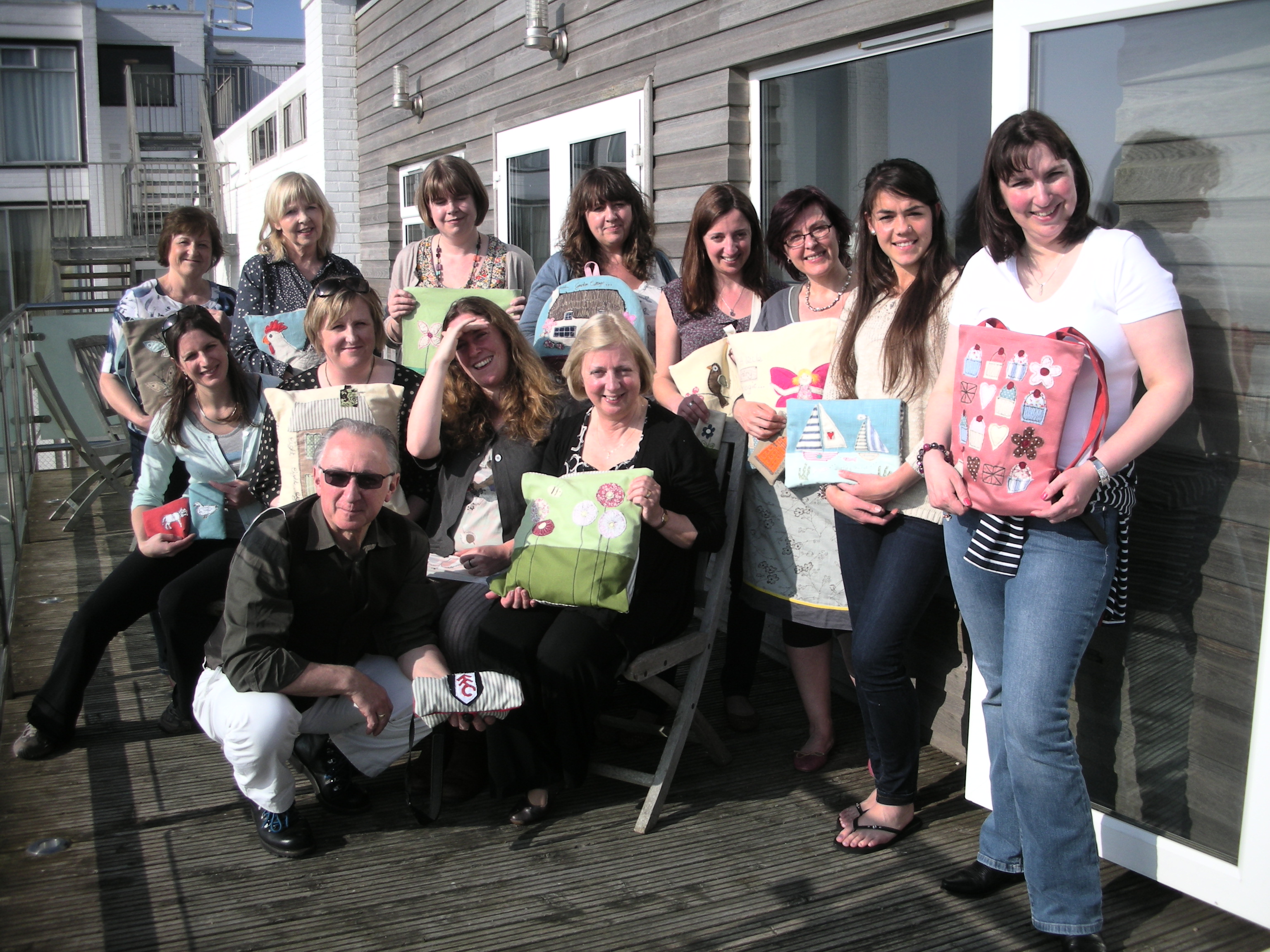
I was back there again the other week, for two nights at the low and sprawling Bedruthan Steps Hotel, enrolled on to an embroidery weekend with a group of women who share a passion for Cornwall and sewing. I should add, my stay wasn’t out of choice. It was a commission for a newspaper who wanted a man to spend some time learning girlie stuff. A female writer was handed a more manly assignment.

The women in the group all came with ideas of what they wanted to make. Most planned cushion covers, bags, or wall hangings, that they planned to embellish them with machine embroidered – motifs; furry animals, flowers, toadstools and the like. Pressed on what I would do with my time I suggested something more practical – a camera case with a hand sewn Fulham Football Club badge on the flap.

The course is run by Poppy Treffry, the surname pronounced with an emphasis on ‘fry’ as in fish fry. She’s very Cornish. She grew up in a two up two down on Bodmin Moor, but got herself through art school and now runs an embroidery/textile business in Penzance.  I knew she was true Cornish when she told me she’d ordered steak at the hotel’s seafood restaurant. I’ve never met a Cornish person yet who eats fish.

Poppy has boundless enthusiasm. She taught me how to thread and use a sewing machine in the time it takes me to press a pair of trousers. While keeping an eye on what the others were doing she showed me free-hand embroidery: it’s not easy. I found the first day difficult. I kept snagging the machine. I broke two needles and cut myself.

The second day was better, and by late afternoon I’d embroidered an FFC badge in red, white and black, and following Poppy’s instructions, sewn a bag, also in team colours.

Take a look and see what you think? 

The Bedruthan Steps Hotel has a range of courses, from sewing to bread making and basket weaving, throughout the year. They’re good value too. Mine was £324 for the course, accommodation, all meals and some of the best views in Cornwall.

Bedruthan Steps Hotel, Mawgan Porth, Cornwall/www.bedruthan.com

Poppy Treffry’s work can be found at www.poppeytreffry.co.uk and there is more about my weekend at the Bedruthan Steps Hotel on her blog http://poppytreffry.wordpress.com/

Posted in Seashores | 1 Comment

Dinner In Drummond Street

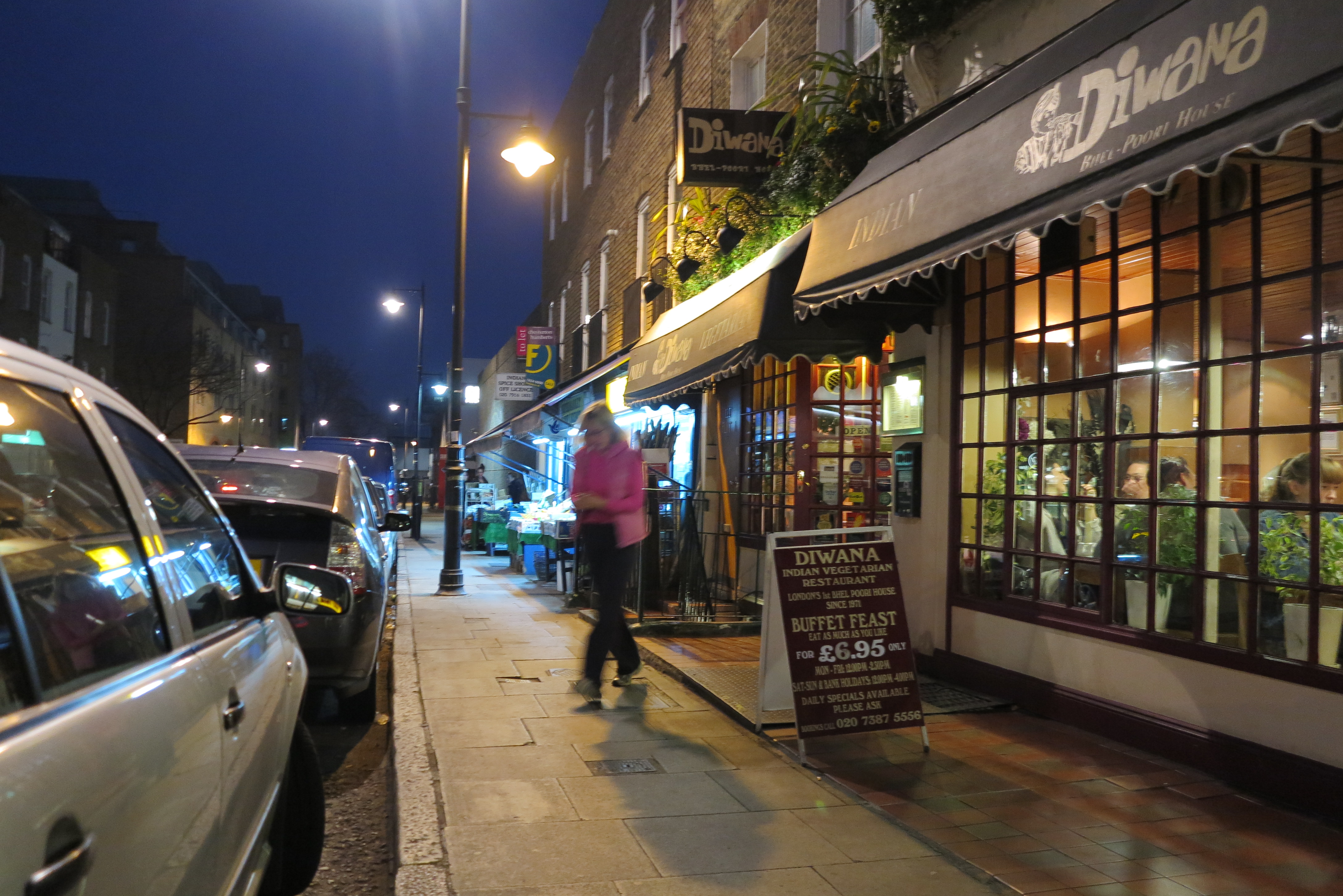
I am not a vegetarian, and I can take or leave Indian food – much of it in London seems indifferent, even a bit samey – but once in a while I like to pass by Drummond Street, just off the Hampstead Road, for a bag of mixed pakoras from the Ambala Sweet Centre, or for an inexpensive, meat free meal. There are a few places to choose from, but Kim and I tend to use the Diwana Bhel Poori House, beneath a fancy brown awning at the eastern end of the street.

I think if were to live more centrally I’d like to be on or just off Drummond Street. Like the eye of a storm there is calmness to the place, and unlike the West End where the air is muggy with the scent of overused fat, the air in Drummond Street is lightly spiced. And because few buildings are higher than three storeys, the sky is big, and at night, speckled with the lights of nearby office blocks.

Drummond Street is a world within a world. Another London, turning at its own speed on a different calendar. It’s been this way for as long as I can remember. All of which will change, and maybe not for the better, if proposals for the High Speed 2 (HS2) go ahead.

If you don’t already know the £33 million HS2 project, that will, boast its proponents, snip 30 minutes off the journey time by train between Euston and Birmingham, will cut a swathe of destruction through Camden Town. It looks certain to cause the demolition of over 250 homes in the Regents Park Estate, mostly on the western side of the Hampstead Road, and to accommodate an expanded Euston Station the London terminus of HS2 will devour all, or most, of Cardington Street, and crucially about 20 per cent of Drummond Street.

The scale of the project was described by the local Member of Parliament, Frank Dobson, as of another St.Pancras International.

 Many, who have lived along the proposed route, and will have to be rehoused, are traumatised.  Especially those who bought their council flats and who are faced with having to leave the area altogether owing to the value of their property, if compulsorily purchased, not being enough to pay for alternative accommodation in Camden Town. The council is fighting the proposals, and there is a long way to go.

Being mindful of the plans gave my trip there a different perspective. Some of the street will go forever, and the Diwana Bhel Poorie House will find itself cheek-by-jowl with a new mainline railway station.

You wouldn’t know of any of this to judge from the smiling faces within the restaurant. Boasting on its Facebook page that it is open 364 days of the year it is always packed with an assortment of office workers, hippie families with noisy children, student types, and the sort of old school fourth age leftie who would probably knit their own footwear given half a chance. Kim, Rob, Debs and I shared two plates of Bhel Poori, the spicy, crunchy starter made with puffed rice and chutney. For their main courses they each ordered those vast dosa pancakes, rolled into tubes that hang off the edges of plates, and stuffed with spicy potatoes. I went for a thali, which is a selection of rice, vegetable curry, dhal and chapattis.

Diwana isn’t licensed and so most people nip next door to the spice shop and off licence. It’s where Kim buys her spices for our curries, at a fraction of supermarket prices.

What did the man with the heavy bottom lip and the wavy white hair at the till think of the HS2 plans? “If it happens, it happens,” he said with a resigned shrug.

Was he worried? Are people in the street worried? “Yes, they are,” he said looking me in the eye, perhaps forlorn with all the talk. “We’ll have to see.”

Posted in London | Leave a comment

do dogs dream?

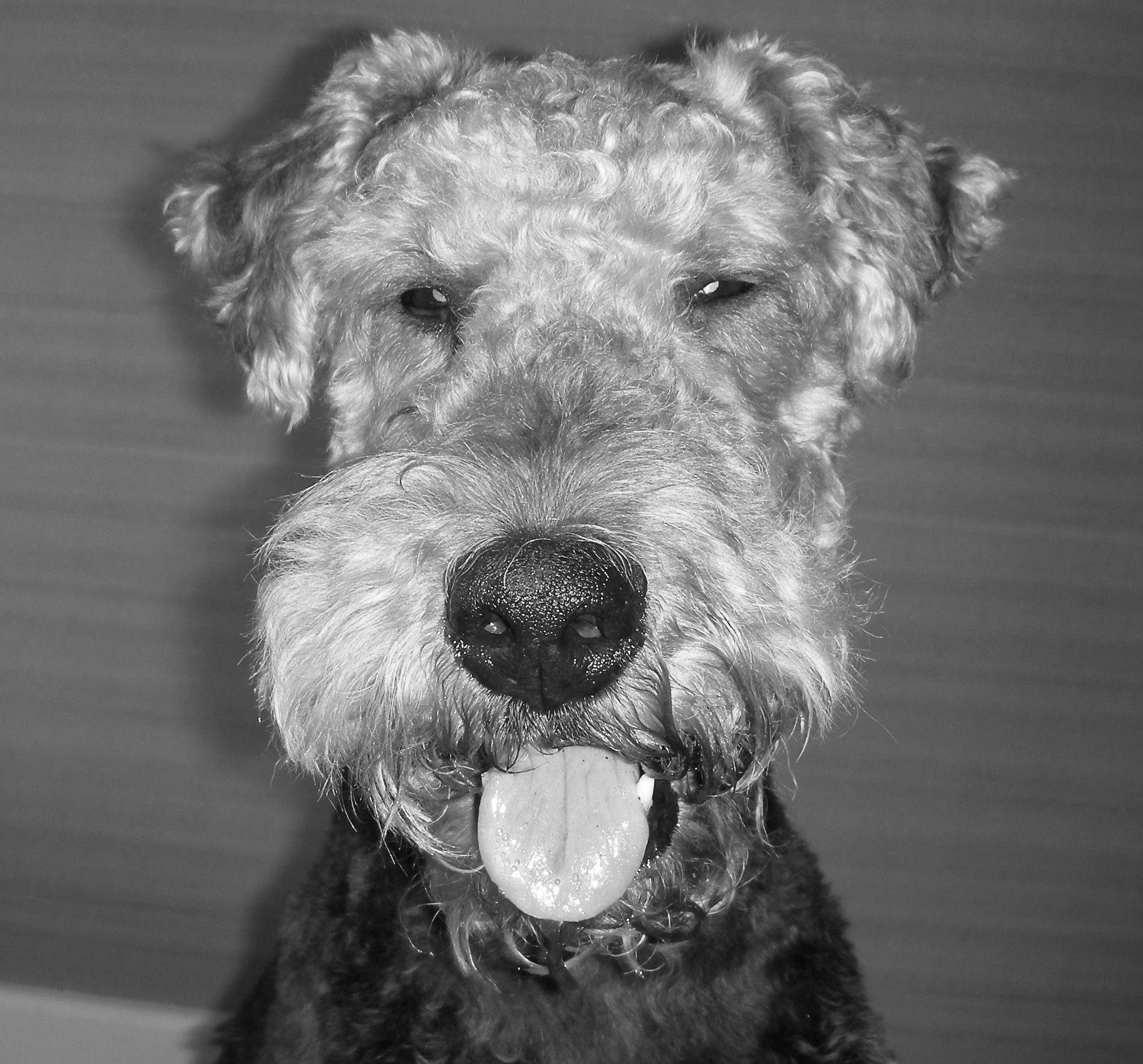
Tashi Delek isn’t very old, she’ll be 12 this coming June, but that’s a good age for an Airedale Terrier, or any big dog, and she’s beginning to show her age.

She is in pretty good shape, maybe a bit thin around the flanks (getting her to eat two meals a day has never been easy), but she’s kept her black ‘saddle’ and hasn’t succumbed to that salt ‘n pepper beard, the tell tale sign of many an aging pooch.

It’s her legs that are the principal cause for concern. They’re letting her down. This morning the hind pair buckled as she went through the garden door. She did the splits, and was visibly shaken. The front ones often go too, if she’s had to make a sudden change of direction, or the ground under paw is a bit damp and slippery. When it happens it saps her confidence, and invariably she’ll turn and head for home, scraping her paws every other step, a sign that she isn’t lifting them adequately.

A few years ago a vet in Cornwall diagnosed arthritis in one of her front legs, and prescribed Rimadyl. She’s taken one 50mg tablet every day since then, and she’s been much improved. I don’t know what they put in them, but apart from Bonios, cheese, chicken and chocolate, it’s just about the only thing we can get down her without any kind of coercion.

With her tale erect she’ll go for short walks, of sorts. More long, distracted plods, punctuated with dozens of diversions; a twig here, a bush there, and long stationary looks toward some unknown point in the distance, as if she were on some sort of surveillance. Walks that a man on crutches could achieve in 20 minutes can easily last well over an hour with Tashi.

She does have some reserves of energy, in storage for emergencies like squirrels, postmen, and moving tennis balls. At these times she can cover short distances at a creditable sprint. Thereafter plodding, even slower than before, her energy levels depleted, but with a look of satisfaction on her furry face that only Kim and I can recognise.

It is a fact that dog owners often speak to other dog owners. I am not referring to the groups of dog people you often see huddled together, deep in conversation, while their dogs wonder what’s going on. Rather the off-the-cuff remarks other owners feel obliged to make, as if the very fact that both you and they have a dog is membership to some secret canine society that does away with normal British reservedness. In much the same way that motorcyclists nod and acknowledge one another.

To this end many people I would never normally communicate with feel duty bound to comment upon Tashi’s age, and general feebleness. “Oh, bless,”  they’ll say, and, “she’s doing well for an old ‘n”. It’s a kindness, of course. They really do care, because they know how short a dog’s life is. As Hugo, a stooped former military man in Padstow remarked, with a tear in his eye, after his best friend died a year ago, “it’s not fair, their lives are too short.”

I daresay the man sat by the fire at The Lamb Inn, in the Wiltshire village of Hindon, felt the same way, as Tashi stumbled down the short flight of steps into the pub, looking dazed. He looked a bit like Nigel Bruce, whom some may know as Dr.Watson in the original Basil Rathbone Sherlock Holmes mysteries. His wife remained silent as her husband, in tweeds and brogues, inquired as to Tashi’s age?

“Eleven eh,” he said, leaning forward. “It’s a terrible thing when they have to stick the needle in, and it’s all over.” Upon hearing that his wife, the size and features of a small bird,  stunned, by her husband’s tackless candor, wrestled with his arm and extracted an apology of sorts.

Of course, he meant nothing by it, the old fool. But since then I’ve been just that little bit more attentive of Tashi. She’s on the sofa now. Lying on her back with her legs in the air, one out straight like a Nazi salute. I wonder if she knows she’s old? Or maybe she just thinks the squirrels are getting faster.

Posted in Dogs, Uncategorized | 2 Comments

Kim’s Work On Sale In Fowey

This week Kim secured a second outlet for her painted and embroidered beach scenes, that until now have only been available through Sarah Adams’ Padstow Studio. Henceforth Kim’s work will be showcased at the Fowey River Gallery, a large, two floor space, right in the heart of town, moments from the water’s edge, on Fore Street.  It’s a fine gallery, with high ceilings, and plenty of natural light, and lots of work, much of it by local artists. I have a hunch Kim will do well there, for the simple reason that her pictures are so beguiling. Beautifully executed they captivate everyone who takes the time to explore her charming vignettes of Cornish beach life: the paddlers and picnickers, the surfers and sand castle builders, the dog walkers and daydreamers.

It’s been a while since I spent any time in Fowey, a handsome town, with ginnels, fine pubs, and views at every turn. My friends Pat and Bruce had a tall house by the water’s edge, with a terrace where Pat, with a glass of wine in her hand, spent many hours craning her neck to count the stars. I was fond of the long, up and down, often muddy trek from Polruan, on the other side of the harbour, through the woods to the old jetty at Pen Pol. Then the long slog up around the headland and down to The Old Ferry Inn by the Bodinick Ferry. It had rained so much one time we left puddles on bar floor.

I returned to Fowey last spring to research a piece for The Sunday Times on the town, published to coincide with the Daphne du Maurier Festival. I showed Kim some of the places I’d been taken too, after we’d dropped off three of her pictures with Kevin, owner of the Fowey River Gallery. He seemed happy for Kim to concentrate her skills on the north coast’s beaches, notably Constantine, Harlyn and Padstow’s Harbour Cove, the settings of much her work to date. Nevertheless Kim aims to give her new gallery some images closer to its home. With that in mind we drove down to Readymoney Cove, at the western edge of Fowey, where, beneath a clear early spring sky, Kim took photographs, and got the lay of the land.

Before we left the area we took the lane, about a mile outside Fowey, off the Par road, that runs alongside Menabilly, the house and estate where du Maurier wrote many of her stories. Last year I’d asked a couple of local people, one a farmer and  another walking two black labs, if one could see the house from road. I got the impression they don’t like people asking that question. The house remains an enigma, deep in a thicket of trees. Next time we’ll park up and follow the path to the beach.

Fowey River Gallery, Fore Street, Cornwall, PL23 1AQ. 01726 833828/foweyrivergallery.co.uk

The Padstow Studio, 30 Duke Street, Padstow, Cornwall, PL28 8AB. 01841 533777/padstowstudio.co.uk

Posted in Seashores | 1 Comment

Another Goldrush After The Goldrush


Last week I found myself in Sister Ray Records, on London’s Berwick Street, looking for a copy of Neil Young’s After The Goldrush, for my godson, who would celebrate his 16th birthday in a few days. It was a sharp, and cloudless Saturday morning, with the air temperature so cold I was grateful for my thermal underwear, and Thinsulate beanie hat. Whether it was the extreme cold, or the Saturday morning lie-in (or a combination of the two) Soho was deserted, and I found myself being the only customer in a store that is almost as big as Ronnie Scott’s, itself a few streets away.

I know Sister Ray’s glass double frontage well, having dwelt outside it many times to see what’s what in a modern music culture that left me behind a long  time ago. Like a lot of men of my age most popular music leaves me cold. My thrills nowadays coming from jazz, country, folk, and blues. But I like to know what’s going on, which requires me to keep up to speed via music reviews, repeated listenings to iTunes, and scanning the windows and ‘staff recommendations’ of emporiums like Sister Ray.

I had gone specifically to that store because I wanted to buy my godson a vinyl copy of the album that had started my lifelong affection for Neil Young. The album, as famous for the the standout track Southern Man as it is for Young’s patched jeans on the cover,  also kick started an abortive and rather embarrassing predilection of mine for faded denim; but that’s another story for another time. My godson’s father had mentioned, by way  perhaps of impressing me with his son’s cultural sensibilities, that his boy had returned home some weeks before with a stack of used vinyl albums. This, in itself, is not so remarkable. After all, there has been no shortage of articles in print and online regarding the increasing popularity of vinyl, especially among young people. I know of only four regularly used old fashioned record decks in homes, and two of those are mine. But it’s impossible to argue with the facts that vinyl album sales were up 40% in 2011 over the previous year. And while vinyl albums in the UK may only account for 0.2% of overall sales, that still constitutes over 250,000 brand new 12” platters. I understand that vinyl singles are doing equally as well.

I telephoned several stores that stock vinyl, from a list I came upon on Google. Sister Ray was the only one with a copy of Neil Young’s 1970 breakthrough album. They had several copies. Excited, I asked about others in contention: The Stone’s Exile On Mainstreet, and Crosby, Still, Nash & Young’s Deja Vu. Both were in stock, but, said a voice, I had better make my mind up quick on the Stones’ 1972 double as Sister Ray had only the one remaining.

There is a lot of talk about vinyl having a better sound quality than compact discs, and downloads. Just the very hint of a better sound (the word often used is ‘warmer’) brings the digital nerds out of the woodwork. Frankly I don’t know if it’s better or not. My godson’s father (the owner of one of the other two record decks I mentioned) said he thought vinyl would always have an enthusiast, limited edition appeal. In the way that some people, he says, would rather own a hardback instead of a paperback book. I like the analogy, because I can’t say I enjoy the words contained within a hardback edition any more than those that constitute a paperback version. Print is print. I read at the same pace, and get the same thrills. But the hardback versions look better, and I tend to treat them more reverentially. I feel the same way about vinyl. Compact discs are nasty little things, and downloads, well, they’re nothing but code. The best you can say about both is they are convenient. And that’s good enough most of the time.

In an effort to nail this I’ll finish this preamble by saying that there must be something in the vinyl revival for the simple reason that some weeks ago it was the subject of a Radio 4 Today report. I always enjoy those sorts of items on the show because it means  the story would have been hot news weeks before. Like me hearing a tune by Flight of the Conchords, and thinking I’d found some unknown Antipodean gem only to be told by my wine supplier, a House addict by the name of Slacker, that the comedy duo had enjoyed a hit television series for a number if years. Radio 4‘s Today and I have much in common.

Deciding upon After The Goldrush, Q Magazine’s 89th greatest album of all time,  was easy. I love it, and those screeching industrial guitars and Young’s  emaciated vocals still sound good today. Whenever I buy music for kids I make certain it’s only something that effected me. I’ve given What’s Going On, The Last Record Album, Catch A Fire, and more copies of I Am Shelby Lynn than I can remember.

To be certain my godson didn’t already have a copy I called his mother, who surreptitiously went into his bedroom while he was downstairs in the kitchen, apparently raiding the fridge. It wasn’t the fact that he had a dozen or so albums to his name, it was the artists he had that stopped me in my tracks: Two albums by Van Morrison (Astral Weeks being one of them), two from Littlefeat, one by John Martyn, and couple by The Clash. A cool selection in anyone’s books, and not one of them recorded within the past 30 years.

I did some more digging around and discovered that the best selling album, on vinyl, in 2011 was Abbey Road, probably the least loved of all their albums by the actual Beatles. I read a long time ago how Lennon rejected the pop concept medley on side two. It may have made more sense if the best sellers list had been dominated by other vintage releases. It would have at least been in tune with my godson’s taste. But no. Artists selling well on vinyl include Fleet Foxes (29,700), Bon Iver, Mumford & Sons, and of course Adele. The only other old school rock band in the best sellers (I daresay they repudiate that description) is Radiohead.

No, my godson is listening  to music that was made before his father was old enough to drink. Which is incredible. I recall my own father, who used to work  for the Daily Mirror ‘back in the day’, coming home with a Buddy Holly album. Upon learning that I was into pop music the office messenger had generously leant me Holly’s most recent. As if I had any intention of playing it. Why, I reasoned in my angry young man way, would I want to waste my time listening to music recorded some years prior by a man in glasses who had been dead five years?

Pop music, if it is to have any relevance at all, must speak to the generation for which it is made. Well, that’s how my school friends and I figured it. Anything more than a year old wasn’t worth the price of the plastic it was pressed on. For all my father’s enthusiasm for Buddy Holly,  Elvis Presley, Billie Holiday, Big Bill Broonzy and Bunny Berrigan I only had time for current music, and I respected my father’s opinion. He played a cool boogie woogie piano, and among many claims to fame, had actually performed on stage at the original Cavern Club, in Liverpool.  But come on. Like I was going to turn up at my mate’s house with something recorded five, ten , twenty, even thirty years before. If the 60s meant anything, it meant modern.

When I was my godson’s age we didn’t do old. There was far too much ‘now’ for us to waste valuable time on ‘then’. The equivalent to my godson’s taste for ‘progressive rock’, as it was called then, would have been me buying 78rpm copies of Cheek To Cheek by Fred Astaire, or Judy Garland’s You Made Me Love You, or The Boswell Sisters Alexander’s Ragtime Band. If one thing marked out music fans in the 60s and 70s it’s that they were defiantly ‘now’ people. Old simply wasn’t cool, even if it was any good, whatever device you played it on.

The 60s and 70s was a golden age for popular music. This was, after all, the period when record companies signed acts without expecting a return on their investment, sometimes for years. Think about that when you’re chucking bricks at the big corporations; blaming them for the ills of the world.  It’s inconceivable that any of those acts in my godson’s record collection would get near a recording contract today. This is the generation of instant gratification. The idea of an artist being paid to develope as a performer and writer is an anathema to most current MDs.

I first noticed a change a few years ago. I was at a Christmas party for the women’s magazine Elle. I wrote a monthly motoring column and recall getting into an intense conversation with a couple fresh faced girls from the fashion department, who only wanted to talk about Lou Reed and the Velvet Underground. When I said I’d bought Transformer the week of release, and recall the humourless one performing Walk On The Wild Side on the BBC’s Old Grey Whistle Test, they nearly fainted.

The music was good then. Of that there can be no doubt. But Elvis was pretty good in his day too, Holly, Ellington and a raft of others also. My godson and I went to the Hop Farm Festival in Kent the year before last, to see Dylan. Ray Davies was one of the support acts, and I don’t know who was more surprised, him or me, to see thousands of kids singing along to songs that were hits when their grandparents were that age.

I just hope he likes After The Goldrush. He’s of an age when A Man Needs A Maid might have some relevance.

Posted in London | Leave a comment

norfolk

The Titchwell Reserve is two minutes drive away, at the edge of the marshes. From here it is a  landscape of  dykes, fresh and seawater lagoons, and straw coloured reed beds swaying in the chill northerly breeze for as far as the eye can see. Here the beaches are endless, and on mornings like this, with a thin mist rolling off the sea, the sky and horizon merge into one.

 
Posted in Seashores | Leave a comment