Dispatches to Sir Kev Dutton from the Tarn et Garonne – la riviere, vide graniers and renovation, en France 20.08.13

chez nous

Cher Kev,

I did enjoy your last dispatch from the Old Country, and I am sorry not to have attendedyour exhibition. I am in need of an occasion for a pair of slacks. The bucolic lifestyle is whittling away at my accustomed demeanor so much so that I wore the same shirt for two days this week, and have even dined without socks.

I have been reading a wonderful book, The Son, by an American author Phillip Meyer. It’s a long, epic, and savage yarn about settlers, Indians and Mexicans in 19th century Texas. The incredible cruelty, and greed, and the wealth some of the most brutal. Some passages have left me reeling. It follows several generations of one family, and is especially fascinating when recounting the lives of Comanches; I was fascinated by their taste for raw offal and blood, although I do wonder if they spoke in such a laddish way.

We have settled easily into life here in Tarn et Garonne. Days begin with freshly baked bread and home made jams and marmalades, or stewed fruits. Most with fruit I can see growing from my window. Lunches are usually bread and cheese, with some salad, and I leave dinners to Kim, with her gift of making a feast out of nothing.

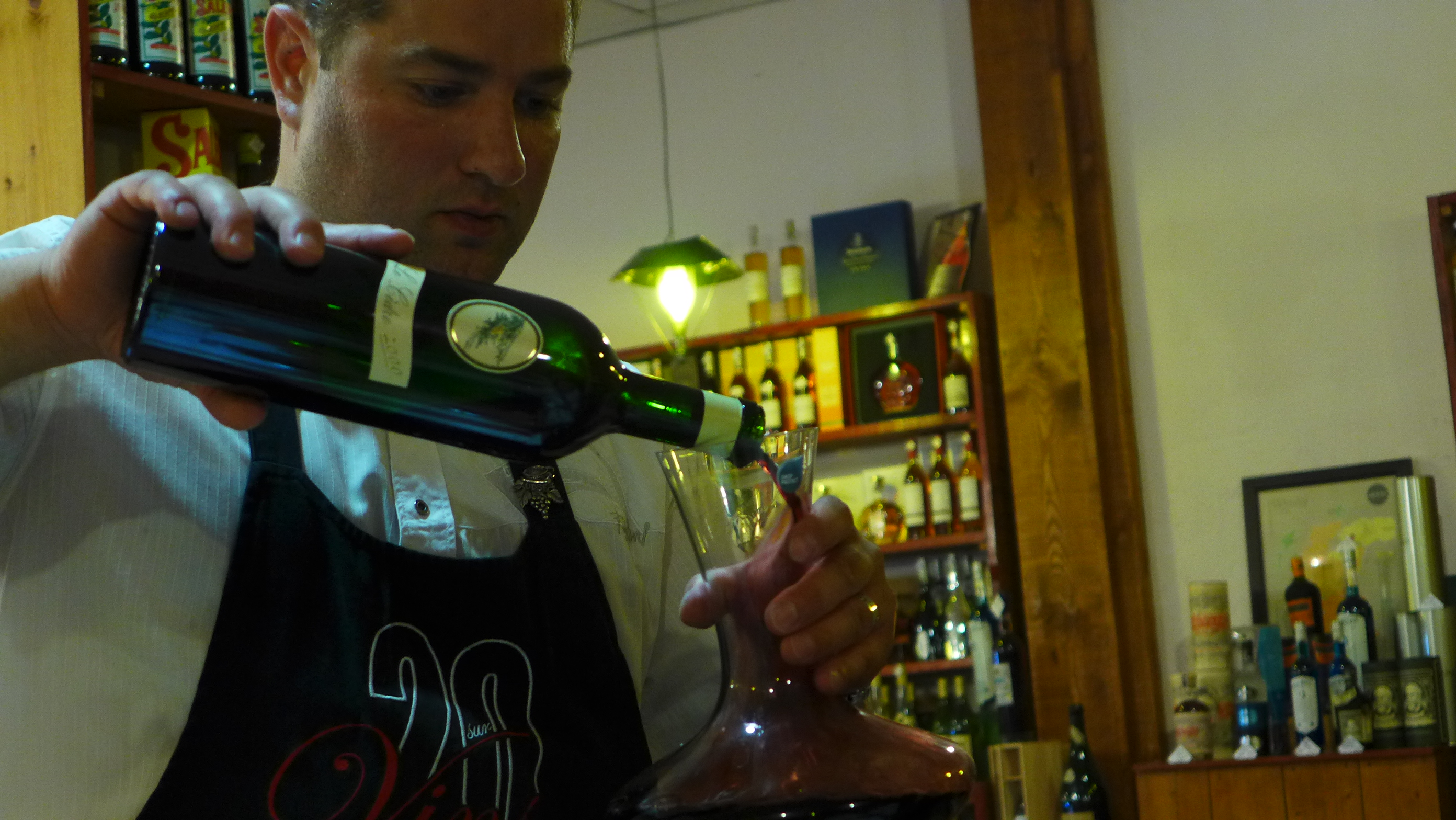
I was pleased to discover some of that Jura wine I wrote about in the local super marche. And I was delighted that our most recent house guest, Eleanor, arrived bearing bottles of a red Sancerre; another rare gem.

Hubert and Anka remain the perfect landlords. They invited us to join them on a kayaking trip, east of Saint Antonin Noble Val, on the Viaur River. It was quite a journey in their Citroen Jumpy, passing fruit farms, and vineyards, limestone quarries, running parallel with a rusting railway track,  and through a serpentine valley with fecund smells too many to identify. Hubert and I paddled his clinker built kayak upstream, a buzzard tracking our progress through the warm, clear water.

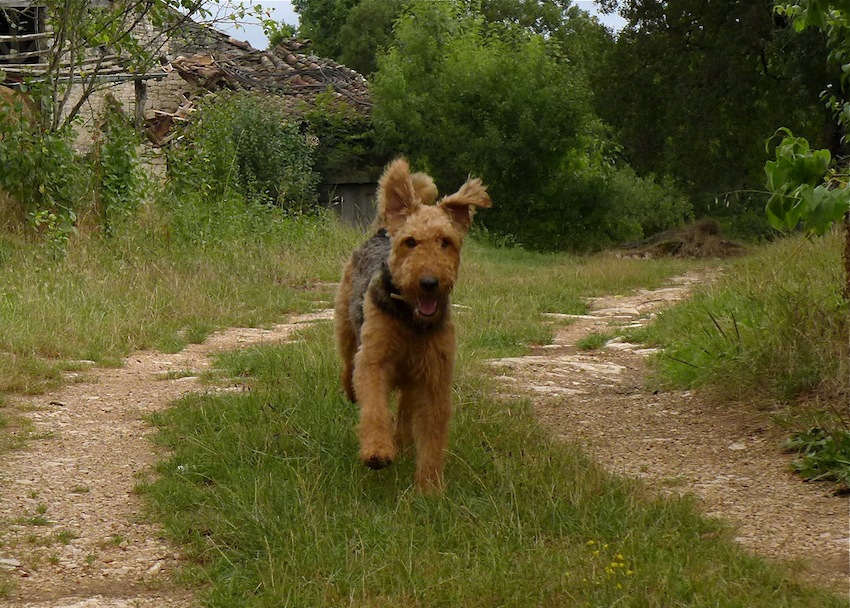
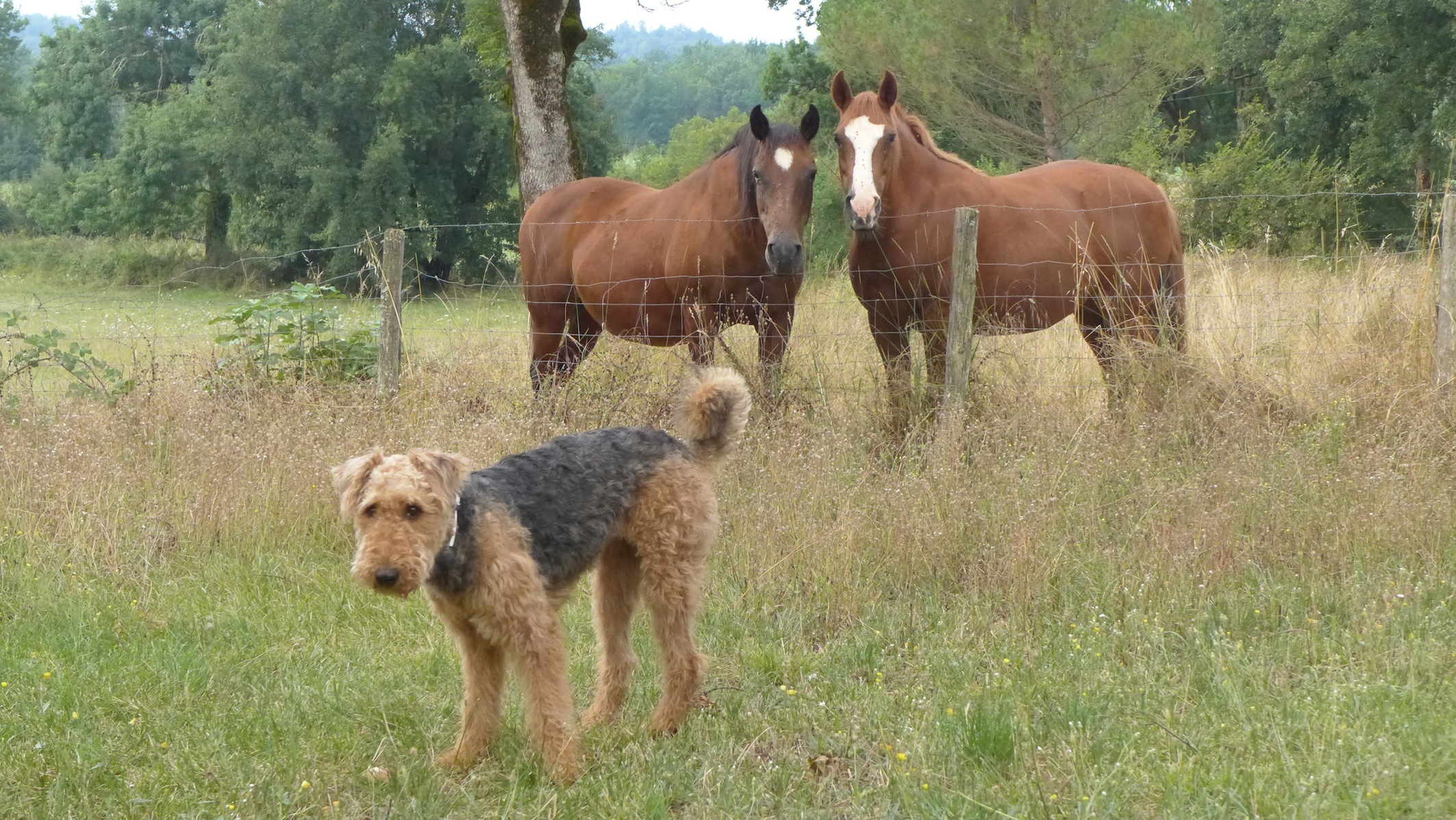
Kim is never happier than rummaging through the odds and ends at vide graniers. There is one almost every day. She and Eleanor returned with hand thrown pots for one euro, and a beautiful hand embroidered linen sheet.  Asta is always a big hit at the markets, and we have met several people who have had Airedales themselves at some time. The local mutts are less agreeable, it may be the rich food. And there have been severable times when we were pleased Asta is such a coward and quick to scarper at the first sign of conflict.

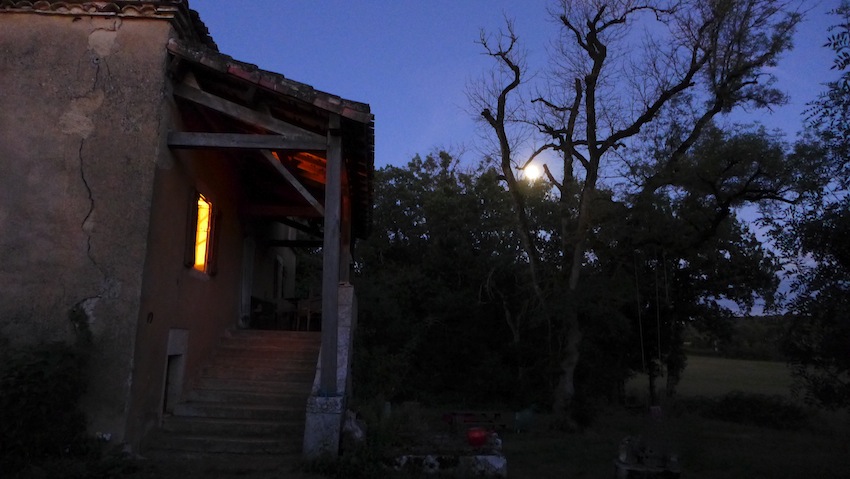
P1020261

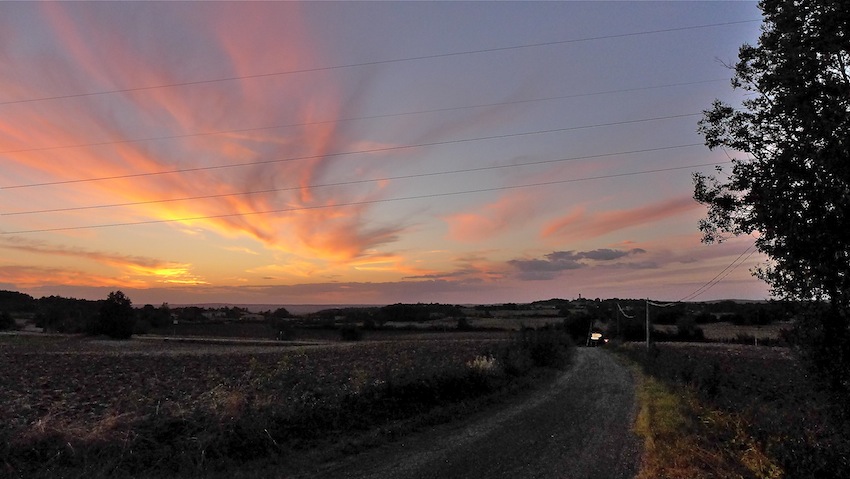
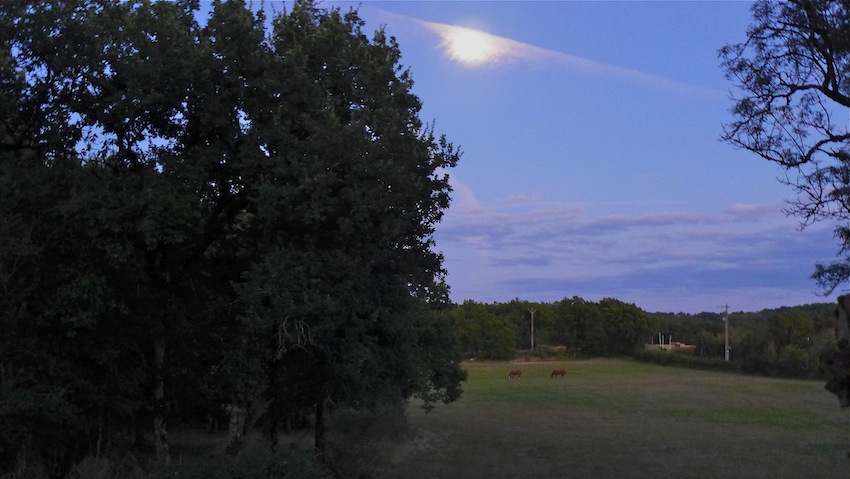
On an early evening drive, the time of day when the colours are so saturated you almost want time to stand still,  we stumbled upon the delightful hilltop town of Montpezay de Quercy. Our road passed some of the most manicured vineyards and timber forests I have seen. The mansions are impressive too, and the area, only ten or twelve miles north west of Causade speaks of money. We are all taken with the tall villa homes at the edge of the town, with views right across that sublime valley.P1020254

Of course, one is for sale and Eleanor duly made an appointment to view. What a revelation. Inside full size marble statues of Joan of Arc, and other notable French figures, enfilade doors leading to salons three meters high dressed with heavy, garnitured pieces, sconces of arms with clenched fists bearing candles, oil paintings of stout men and vast fireplaces. Imagine Citizen Kane’s Xanadu crossed with the V&A, and all for the price of a one bedroom former council flat in London. We sat and drank beer to consider her options.

Eleanor has now departed for Carcassonne to be with her son and grandchildren, but before she left she prepared a delicious fish stew with pollack and prawns purchased at the market in Causade. The poissonniere was delighted to lean the English word for the fish is ‘pollack’. He said it’s the French name for Poles, and laughed when I remarked that like the Poles, it is best served with vodka.

Sadly, Sir Kev, our paths may never cross again. Much as I have enjoyed our work together in Wapping the new editor of the section for which we are employed has deemed me surplus to requirements, and on his first day in his new job informed me, from afar, that my column is neither valued nor required. I shall miss our chats and the occasional fig roll. I daresay something will turn up, and until it does I still have eleven Havanas.

Yours as ever,

P1020335

Posted in Dispatches from Tarn et Garonne, travel, Uncategorized | 1 Comment

Dispatches to Sir Kev Dutton from the Tarn et Garonne – du pain et d’autre choses 12.08.13

sunflowers

Cher Kev,

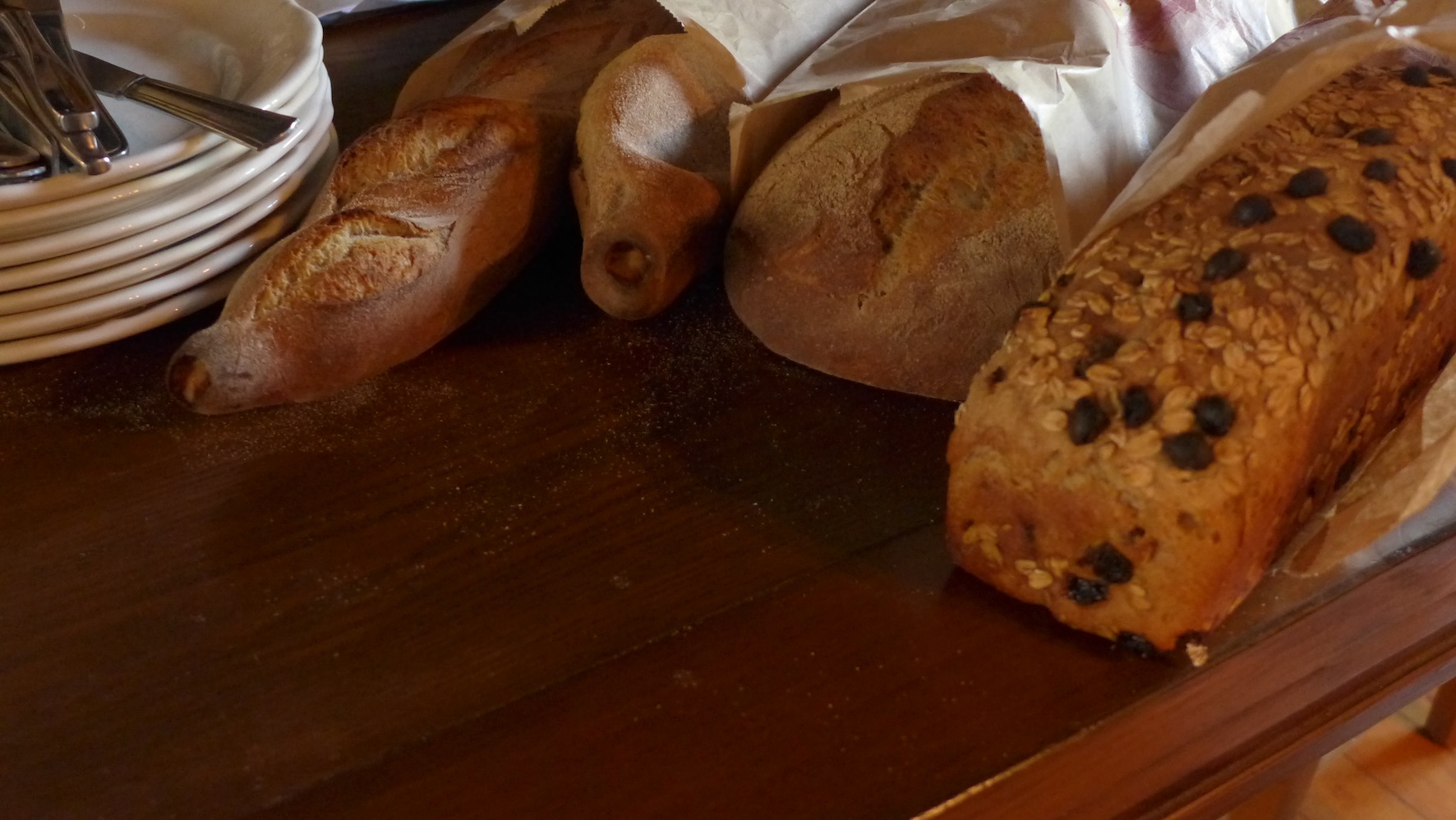
Thank you for the kind offer of Ralph Lauren Madras cotton shorts. In fact, I think a pinafore would have been better, having spent six hours baking baguettes, pain de siegle, pain de campagne and pain aux noix, in Hubert and Anka’s bakery.

Hubert used to sell his bread at local markets, but these days – what with a bad back and the desire to retire – he only bakes twice a month, selling to friends and others who make the drive out here.

Most of my baguettes passed muster, and the pain aux noix (with walnuts and raisins, a bit like one I  bake at home) exuded an innocent charm. But I made a bit of hash of the pain de campagne. Hubert uses the sides of his hands like spatulas, forming the shapes, lifting and dropping on to the floured surface in one deft movement. Mine were less graceful.

spot the futrell baguette

kneader

the bread over

baking equipment

dinner

We used flour milled from various wheats grown on the farm kneading the dough in iron contraption that’s over 100 years old.

One of my duties was to get the wood burning bread oven to 300 degrees. It was hot work and to cool off we drank cold beers outside, overlooking Anka’s tomato plants. There Hubert told me about a cave beneath the farm where a friend – an amateur caver – discovered the skeleton of an elephant: He’d emerged after an afternoon in underground lakes and caverns with an elephant’s molar, that experts at a nearby museum confirmed to be from a beast that would have walked these harsh lands before the last ice-age.

The bread is delicious.

Meals en France are such a joy and I am sure there was a time in England when restaurants were affordable and unpretentious too; alas, not anymore. Only in France is the ceremonial formality of balanced meals – three or more courses and wine – combined with sensible prices. We dined at at a nearby auberg the other night, enjoying kir, a ‘pichet’ of wine, a salad, a meat entree, and dessert, for 22 euros. I wore the powder pink blazer.

Lunch today in Caylus, a hill town with bohemian shops, was even better;  sur la terrace, beneath a cloudless sky, with Asta curled up, and a priest wearing a crucifix so large it might have come from the church steeple. Three courses for 12 euros.

Our day had begun with another river swim. We were told peregrines live in the limestone cliffs, although we didn’t see any, but Chris spotted a kingfisher and Asta nearly caught a branch that Kim threw in the water.

Asta is endeavoring to make friends with the horses at the foot of the garden. She’s been temping them with well chewed plastic ice cream tubs and the remains of my baguettes. They’re not impressed.

asta

asta

With Saint Antonin-Noble-Val – like Padstow in August – heaving with holiday makers, we followed a dappled valley to a boot fair in Saint Projet. Shirtless men played boules on a sandy square. Kim bought a set of green and gold bone china cups and saucers for three euros.

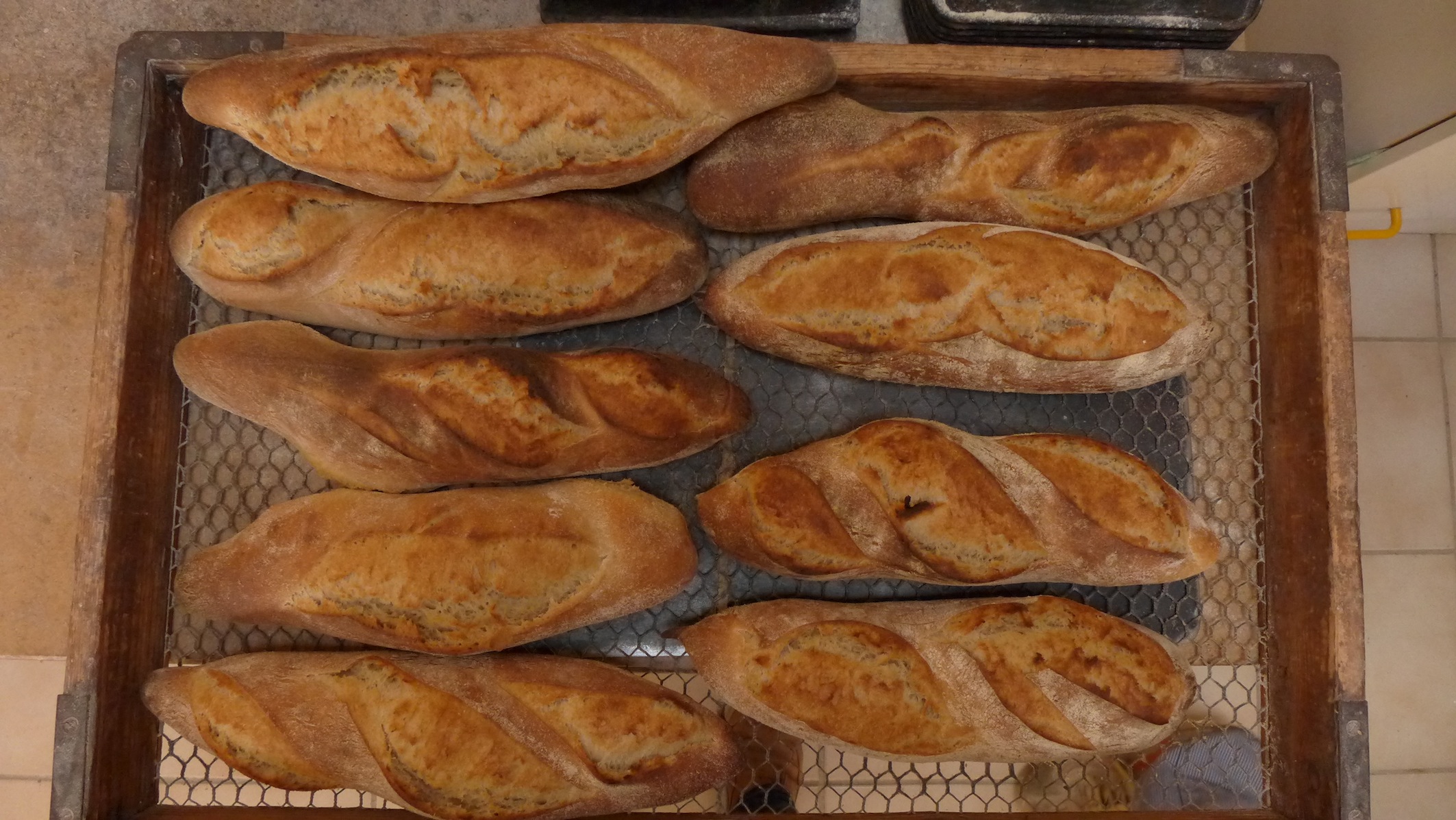
As requested I have included some photographs taken with the LX7. I’m not much of a photographer and I’ll leave it to you to decide which of the baguettes was rolled and baked by your correspondent.

The weather has been uneven since the storm, but is nearly back to full strength, and I am tanned, although sadly back in shorts.

Tonight we’ll be sharing the pain aux noix and counting the stars once more.

A bientot.

Posted in Dispatches from Tarn et Garonne, travel | 4 Comments

Dispatches to Sir Kev Dutton from the Tarn et Garonne

Cher Kev,

As you are aware Kim, Asta and I are in south west France.  The journey was arduous and difficult. So much so that our first meal en France was a MacDonalds.

It has been very hot. Today is the first day when the temperature permits the wearing of long trousers. Believe me, has been insufferable. Fortunately the heatwave – in the high 30s – broke last night with a dazzling thunderstorm that went on all night, the lightning illuminating the countryside for miles. Thankfully Asta was unperturbed. She’s a brave pup. The air is much fresher today and I for one feel sensibly attired. With luck tonight I’ll be able to accompany my slacks with one of the two blazers I packed: I favour the powder blue linen. We’ll see.

the harvest is in

the harvest is in

The house is charming. Very basic and ever so hippie. There are horses, that Kim thinks might be Arabian, at the foot of the garden. The owners are Dutch farmer/bakers. Hubert is charming with a beard, and she, her name Anke, is leggy, and gamine, with skin the colour of tobacco, and very gorgeous. They are vegetarian of course, which is making me a bit worried about the inevitable aroma from our lamb bbq this evening. Yesterday Hubert rushed to harvest the corn  before the storm and I assisted, shoveling corn from the back of a truck that I am assured was built in 1957.

The tastiest tomatoes around here are oddly shaped, but the wine is excellent and, as you ask, I am down to my last three Havanas, which is a concern.

We swam in a river the other day and local French people (with an excellent wine cellar the husband dug himself (!) below the cuisine)  invited us to dine al fresco. The food was divine; Toulouse sausage and beans and cherries soaked in Eau de Vie with ice cream for desert. My host introduced me to a fabulous white wine from the Jura region.

You ask about music, of which I was prepared. Current play list includes The Basement Tapes, soundtracks Blade Runner and One From The Heart, Daniel Melingo, the Esbjorn Svensson Trio, Lady Day, and Exile On Mainstreet – the digitally remastered version that is excellent. As I write I am listening to my latest, Way Down Low by Kat Edmonson. I can’t stop playing the track Lucky. She is American but looks Swedish.

I have done some writing, but not enough. Friends arrive today and tomorrow.

I’ll send another bulletin in due course.

Posted in Dispatches from Tarn et Garonne, travel | Leave a comment

Arret! Très Chic – how I was that guy

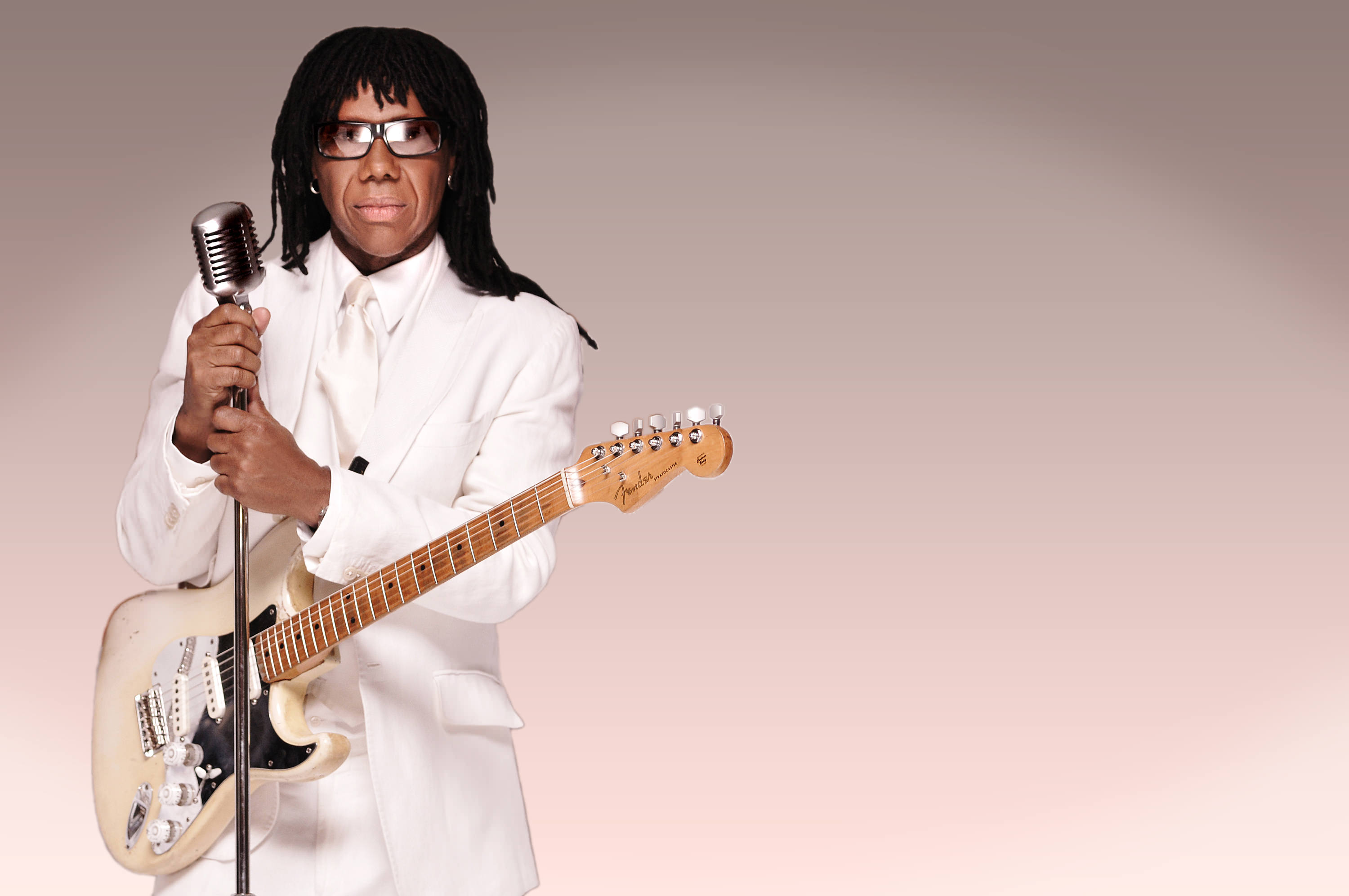
Nile in white with microphone and fender

How many Chic albums do you have; that’s studio albums, excluding compilations and live sets? It’s a simple enough question because there aren’t that many. I have eight, which is interesting because there should have only been seven.

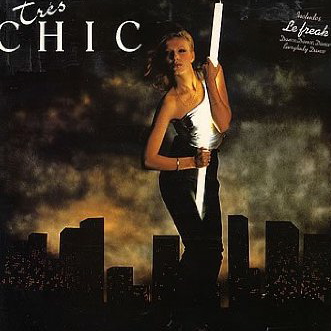
The reason I have one more than most is due to the fact that one of them – Tres Chic, should never have seen the light of day. It appeared late in 1978 and might have done quite well if I hadn’t alerted Nile Rodgers to the fact that the ten track album his UK record label had just issued bore only a passing resemblance to the eight track C’est Chic set that Nile, as co-writer, producer, and lead guitarist, had been expecting me to discuss.

“I love it that you’re that guy that showed us that album cover,” says Nile, just the other day while I am interviewing him for a second time; this time for The Sunday Times’ My Hols column in The Travel Section.

Nile is unquestionably the man of the Summer of 2013. Chic bassist and co-founder Bernard Edwards died in 1996 and Nile himself was diagnosed with prostate cancer in 2010. But you can’t keep a good man down and this year Nile is back in the charts on Daft Punk’s Get Lucky, while The Chic Organization, performing all of Chic’s hits (sounding better than ever) and many Rodgers and Edwards tunes written and produced for Sister Sledge, Diana Ross, Madonna and David Bowie and are on an ever expanding world tour that’s already been to London’s Hyde Park and Glastonbury.

“ It was the most shocking thing that I can ever remember,” Nile says of the misconceived second album.

“There have been two things like that in my life. Obviously what WEA did to that album, and then Motown when they took the Diana Ross record away from us.

Tres Chic - mais non

Tres Chic – mais non

“And what’s funny is these are both massive, massive selling records in my life. That second Chic album, C’est Chic, contains the biggest selling single of the entire Atlantic Records history, Le Freak – and they’re (WEA in the UK) telling us it’s not right.

Thirty four years ago I’d been sitting on the side of a bed, in a West End hotel used by many visiting US music acts. A cassette recorder on my lap while Nile Rodgers paced the room nervously.

“Say that again?” Nile demanded tersely, his mood had darkened from friendly courtesy to brusqueness. He wanted me to repeat my description of the Chic album his record company WEA had sent me, entitled Tres Chic, and depicting a glossy blonde onthe cover with legs wrapped around a fluorescent tube light. Eight new tracks, in addition to the big hits from the previous album, Dance, Dance Dance (Yowsah, Yowsah, Yowsah), and Everybody Dance appeared at the close of each side, and which to my opinion unbalanced what in many ways was otherwise the perfect disco album.

I wasn’t always so forthright with international pop stars, but sometimes you’ve just got to tell it as it is. I was, and remain, a huge Chic fan hoped Nile would appreciate that and cut me a little slack.

When I’d finished he raised a finger and asked me to stay right there. He left the room, returning  some minutes later with a bemused Bernard Edwards.

“Tell him what you told me,” instructed Nile.

I duly did and watched as Bernard’s jaw hit the deck.

“Tres Chic is what we’d planned for the third album,” said Nile. Whereupon He thanked me for my time and abruptly wound up the interview.

WEA duly pulled the album and subsequently issued C’est Chic in the manner Nile and Bernard had always intended. (In the event the third Chic album became Risque, but you can see why the boys had Tres Chic in the backs of their minds.)

on stage

“And you’re the guy who showed us that,” he says, after I confess to have dined out on the tale more than once. I tell him I would have thought the million selling hits from the first album would have  bought him a little record company respect.

“We worked hard on those records. They were complete, with beginnings, middles and endings. We worked on them, it wasn’t chance.

“You know, early on in our career people thought it was a fluke, that we were one hit wonders. They thought somehow we would go away.

“I’m not being egotistical, I’m being statistical. The truth is I’m 60 years old and I’ve just had a million seller here in the UK with Daft Punk and Get Lucky, and I’ve found out there have only been 136 million selling singles here in the UK, ever. We weren’t lucky writing hit records, we worked at it. We’ve learned how to do this and we we write music from out heart.

“And it’s so amazing you are that guy.”

LIVE: Nile Rodgers and The Chic Organization: Indigo, at O2, London (July 27); Bestival, Isle of Wight (Sept 8); Festival 6, Portmeirion, Wales (Sept 15). 

Posted in media, travel | Leave a comment

Driven To Drink – my time (albeit brief) with the late Alan Wicker

icon in a blazer

I met Alan Whicker once, a long time ago. I think it was in the sprauncy resort town of Costa Smerelda, where men wear sarongs, and there are Sunseeker launches in the bay, far north on Sardinia’s east coast.

It was a period after he’d finished doing travel films on the rich and very rich and was moving into motoring, while I was heading in the other direction; from cars to travel.

It was a pre-dinner cocktails soiree in a pleasant single story hotel with a lawn for a roof and ocean views. He was sat alone against the wall, in the middle of a line of empty chairs, cradling a plate of hor d’oeuvres. I remember thinking that he looked just like the Alan Wicker I used to watch on the tv as a boy,  easy with the people and places I could never imagine visiting. A little grey around the ears, and slightly jowly, but sharp, in grey slacks, and a blazer with a handkerchief in the breast pocket.

I can’t remember which German luxury car maker was sponsoring the trip, but you’ll get the idea if I say it was no expense spared. In the car park, beneath one of those flawless Mediterranean skies, stood a fleet of new cars, shiny, and prepped,  poured over incessantly by a small army of men in overalls. Inside a couple of dozen motoring correspondents, many from publications nobody had ever heard of, were caning the free bar and buffet like the world was about to end.

Having previously written for Elle, and later Arena, neither publication noted for their motoring expertise (I got away with writing more about the upholstery than the horsepower), and having only shortly before the trip graduated to The Observer, I didn’t really know any of the hard core car writers there. I was a consumer/style writer, the trip’s lightweight, and I recall whenever the time came to double up and take a test car for a spin, the other motoring journalists would step to one side rather than share a drive with me.

As such I was always the last to get a car. Twice PRs, out of sympathy, hopped in next to me, and one occasion I persuaded a waiter to join me, raising some eyebrows. Only once did I get a bone fide journalist to partner me. He was something of a petrol head race ace with a motorsports magazine. He must have been there for the buffet because it can’t have the motor, a puny Mazda hatchback. His name was Mike and he barely spoke a word as I piloted our car,designed for midwives and retired head teachers, around the Costa Brava in the manner of a crack head escaping the cops. At the appointed driver changeover location Mike broke his silence. Unclipping his seatbelt he looked over his sunglasses and asked, “do you always drive like that?”

That’s Alan Wicker, I said to one of the PRs, explaining what a fan I was. You should tell him came the reply. Apparently the great man often sat on his own at such do’s, a study of suave and polished elegance. I introduced myself and embarked upon a  fan’s appreciation of an idol, mindful not to go too far back in time lest he was age sensitive. How I’d been enthralled by the easy way he slipped in and out of fabulous locations, moving smoothly among the sort of people who would have holidayed there at the Aga Khan’s resort. I said how much my friends and I had enjoyed the tongue-in-cheek Barclaycard television commercials, and thanked him for my passion for brass buttoned blazers. All the while he chewed, nodded and seemed attentive.

And when I’d finished, having told him about myself and who I wrote for, he cleared his throat, and in that often impersonated although never equalled voice, seasoned with emphasis and nuance, he asked me if I would be so kind as to, pass him his drink. I think he stood up shortly after, and left.

It was a brief conversation, but for me, a memorable one.

Posted in travel, Uncategorized | Leave a comment

Honest PR – shock

I get a lot of emails from PRs. And by that I mean a lot, between 25 and 100 every day. Most don’t interest me; they are either inappropriate (I don’t write a lot of articles on women’s underwear, albeit it something I had thought of getting into in the past), neither

not so fast

not so fast

am I interested in children’s clothes, gaming, cosmetic surgery, DIY, transport infrastructure, east European rock festivals, or long stay parking. Just a snapshot of this month’s in-tray.

What they have in common though is a courtesy, bordering upon obsequiousness. Invariably opening with – ‘hello, hope you’re well… ‘ and accompanied with some contemporaneous reference to the weather, or a major sporting event. What I have never received, prior to this week, is an email from a PR describing me as both a “bit or an arse or can be”, and “patronising”. Both of which may well be true, and can be discussed at a later date. But that’s not the point.

To clarify  the email was addressed to me alone, but was intended for another public relations executive (perhaps a newcomer getting  ‘heads-up’ on influential writers) within the sender’s West End luxury goods PR company; a list of the company’s clients reads like a Kim Kardashian shopping list.

In fact, I am not the only journalist worthy of a mention by the PR, whom I shall refer to  henceforth as Richard, Dick for short. There are four of us, all with national newspapers and major consumer magazines: one is a big cheese in fashion (I find him a bit scary myself); another is described as ‘gay gay, nice, quite cultured’; and the last, ‘completely impossible’.

Three of us, suggests Dick, should receive gifts;  the big cheese two, perhaps as a mark of his status, added to the fact that Dick cannot find unpleasant things to write about him. Two, including myself,  should get personalised presents, presumably from the piles of luxury goods that lie around the office, next to empty bottles of Bollinger, and iPads. The fourth (the gay), for reasons that Dick doesn’t make clear, should only receive product information.

Of course, it is impossible to take serious offence from what is, after all, a trivial gaff. But the email does lift the lid on what may be a truer glimpse of what some PRs actually think of the journalists they are paid to impress, co-operate with, and be nice to. It also serves as a warning to those of us who use computers hurriedly of the dangers of not paying attention to software protocols. One misplaced click and your entire database knows you’re an idiot.

In fact, mental faculty is a key element of Dick’s estimation. He writes, and I quote, he “…thinks all PRs are stoopid…” As I wrote in my reply, I cannot can’t imagine where he got that idea from?

Maybe I’ll click the link on the bottom of the email, and follow Dick on Twitter.

Posted in media | Leave a comment

Artful Wine

A Slide Show Sequence For China-1 2

Chateau La Coste is the most unusual vineyard in France. In fact, it’s probably the most atypical vineyard in the world.

In fact, it doesn’t look like a vineyard at all, in the conventional sense. There is no clutter, no abandoned 2CV vans, or craggy men in blue overalls with lips stained amber by a lifetime of Gauloises. There are vines, fanning out like parquet flooring across a valley enclosed by green and white oaks, but there any similarity with conventional vineyards ends.

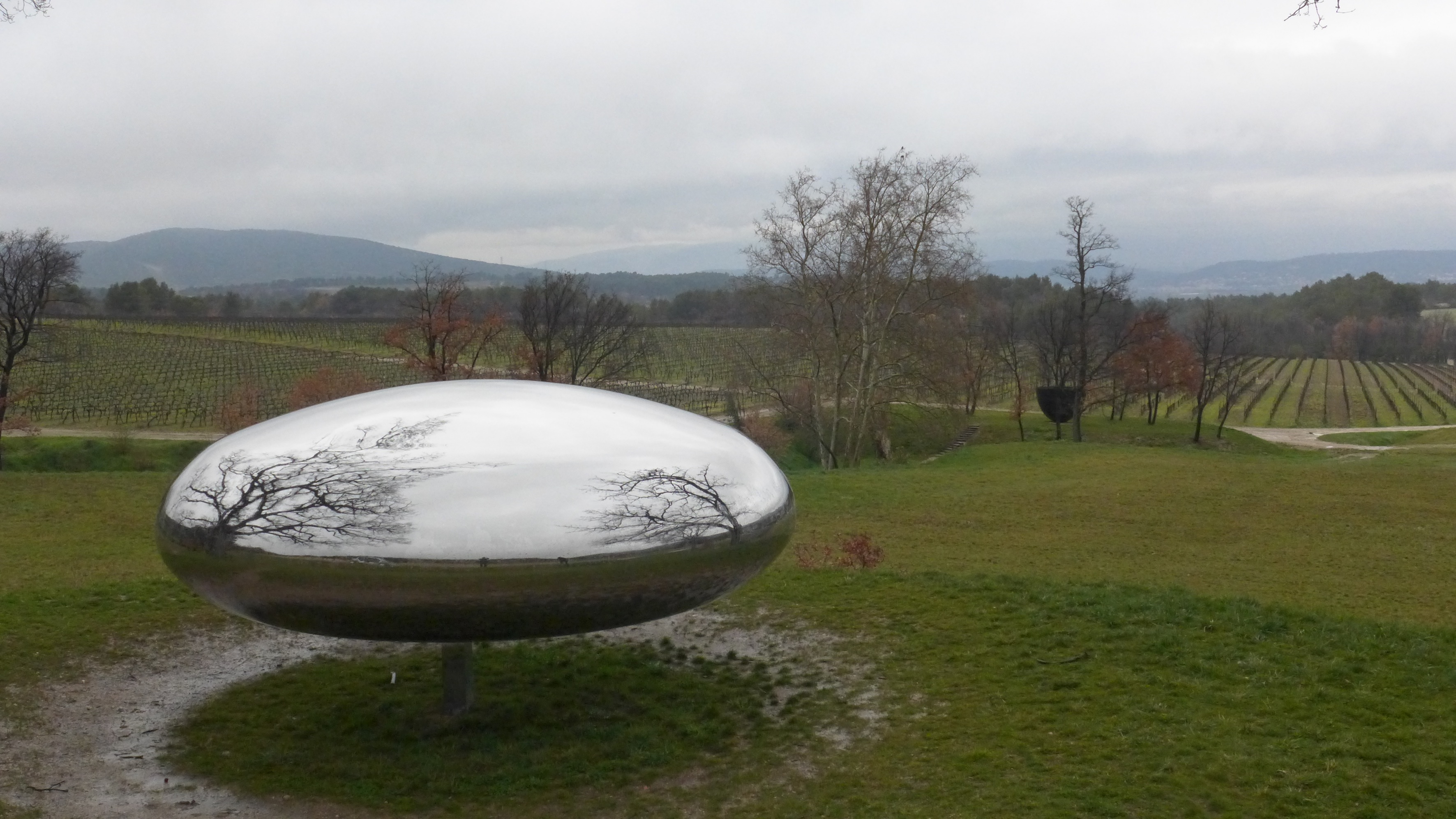
Drop by Tom Shannon

Drop by Tom Shannon

Tando Ando's chapel Crouching Spider

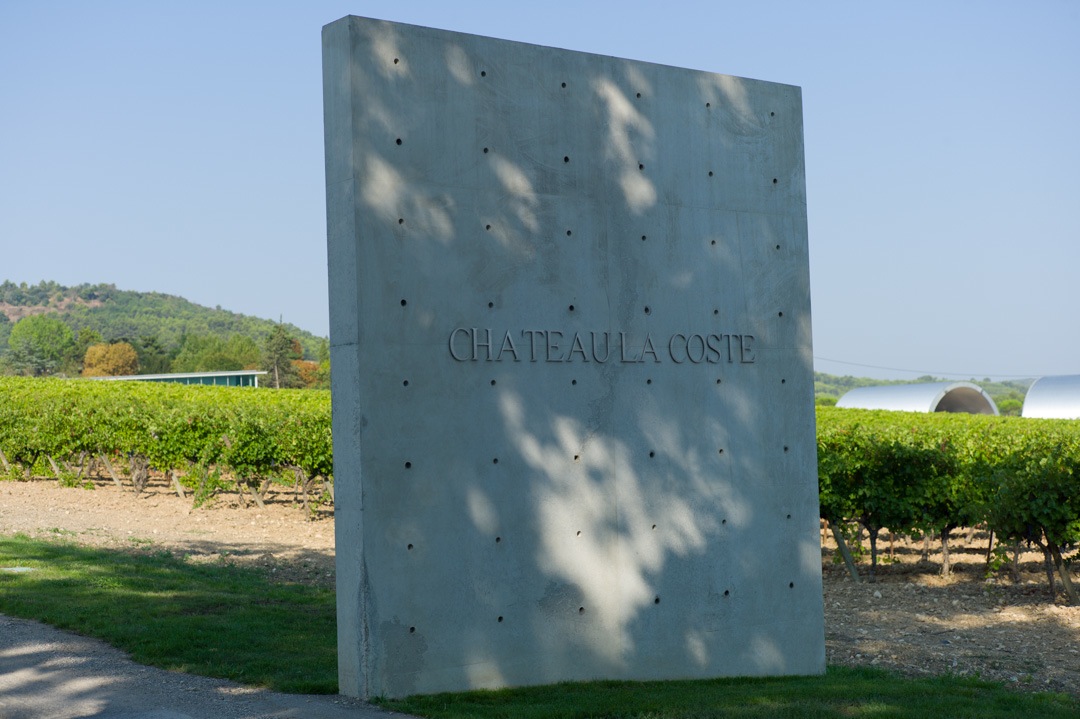
Turning into the 500 acre estate, a 20 minute drive north of Aix-en-Provence, I am confronted by two flat mid grey slabs of concrete,  one bearing the name of the chateau in sans serif lettering, that establish the fact that this is a vineyard with entirely different set of priorities. A feeling enhanced as I a pass a gigantic crouching steel spider towards a single story complex of concrete and glass, called ‘The Village’, with sublime perspectives through every angle. The entire edifice hovering above angular lakes of cobalt water.

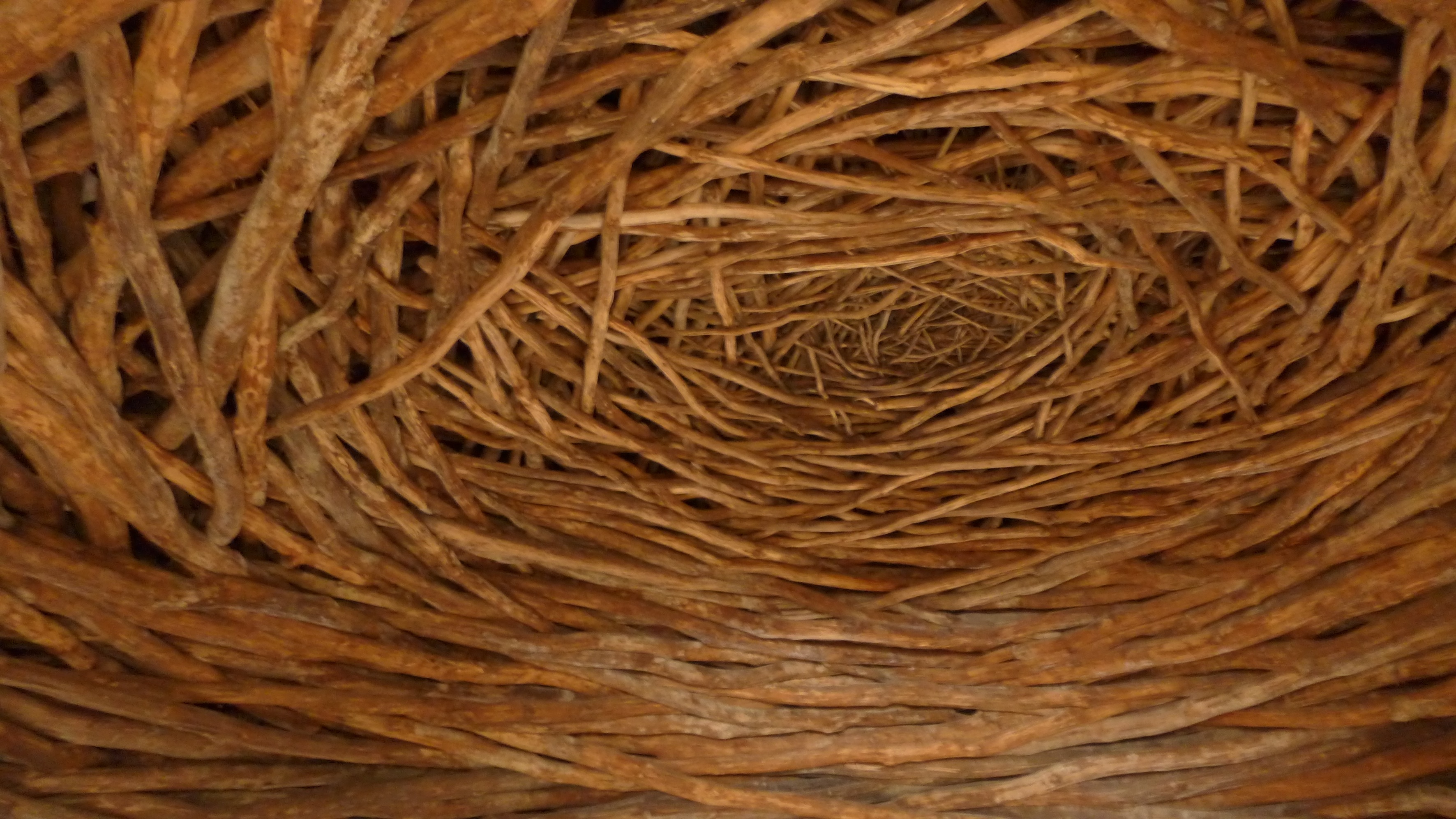
Andy Goldsworthy's Stone On Wood

Andy Goldsworthy’s Stone On Wood

On the other side of what turns out to be the visitor’s centre and restaurant, designed by Japanese architect Tadao Ando, past the original 17th century Venetian villa, are two large, shiny, industrial corrugated half tubes, containing the wine cuverie. Beyond these, located on hillocks, and in small oak groves, more than 20 pieces of land art and sculpture. Among them Frank Ghery’s Music Pavilion, formerly in London’s Hyde Park; a leash of foxes by Michael Stipe, the singer with REM; Tom Shannon’s Drop, a kinetic globule of polished metal hovering, and imperceptibly moving above the terrain; and through a portal in the side of a hill Andy Goldsworthy’s Stone On Wood, a silent and spellbinding subterranean cavern made from interlocking oak trunks.

Tadao Ando has also contributed pieces, including the transformation of an ancient chapel that he happened upon while surveying the property; within its meditative darkness what light there is seeps through a gap beneath the floor, and from three small holes that serve to illuminate a green glass altar.

Other sculptures and artworks are being added all the time, and in two years there will be a hotel and spa on one of the hills overlooking the entire edifice.

The person behind Chateau La Coste is litigious Irish property developer Paddy McKillen, who from a brief scan of the internet appears to spend so much time in court with one thing or another that I am loathe to say too much about him lest I put a foot wrong and find myself joining him in one.  With financial interests around the world, and by all accounts stakes in a number of London hotels, mixed media loving McKillen spurns publicity. Suffice to state his bottomless chequebook pays for everything at the chateau, while the day-to-day running of the conceptual side of the project is the job of his softly spoken sister, Mara.

Jean Nouvel's Wine Cuverie

Jean Nouvel’s Wine Cuverie

But don’t make the mistake of thinking this vineyard has turned its back on its core function. The new biodynamic wine production centre,  three levels deep inside a space age cuverie designed by French architect Jean Nouvel and reminiscent of an epic James Bond film set, is managed by winemaker Matthieu Cose. A barn of a man, a rugby player, and the guiding hand behind a range of notable wines: there are whites, blending sauvignon blanc, chardonnay and vermentino; pale, characterful roses (my preferred choice the Grand Vin 2010 combining 90 per cent grenache with syrah); and inky Rhone like reds of syrah, grenache and cabernet sauvignon. Most are drinking now but Cose insists the Grand Vin 2009 red, already dark, spicy, and aromatically seductive, will be a cracker in 15 years.

All of this is open to the public. Lunch is served daily in The Village restaurant, with wine appropriate to the plate. There are wine and olive oil tours and tastings. And for the hale and hearty  a mapped, and fully annotated, two hour walks around the art installations.

Chateau La Coste, 2750 route de la Cride, 13610 Le Puy-Ste-Reparde. +33 (0)4 42 61 92 92/www.chateau-la-coste.com  

Posted in travel, Uncategorized | Leave a comment

J.Simons – The American Way

The mark of a truly great shop is the way in which the staff know, almost telepathically, what you want, even before you do. And I’m not talking about those algorithms used by iTunes that seem to think my next purchase should be either Frank Ifield – The Essential Collection, or The Crazy World of Stan Freberg. (It also came up with Crosby Still and Nash’s Deja Vu, but I already have that).

P1000653

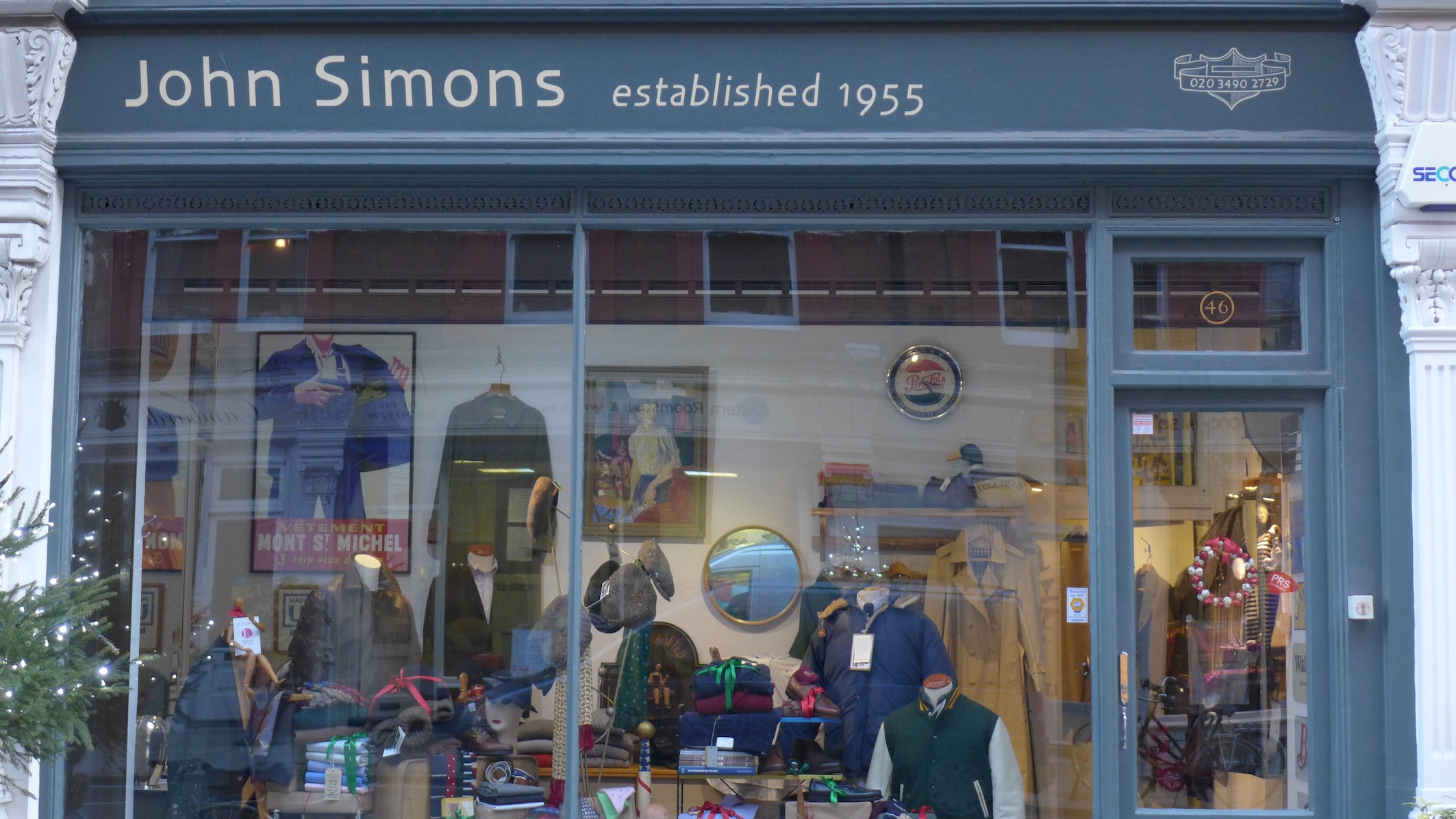
No, I refer to a men’s clothing retailer that not only understands my taste, but factors in variables like the weather, and my fluctuating waistline. This intuitive skill is what makes Marylebone’s J.Simons such a rare gem. That and a stock of the most wearable garments any man, of any age, could ever hope to own.

On a visit some months ago John Simons, the quietly spoken founder and driving force behind the company, that opened its first shop in 1964, greeted me warmly, perhaps in recognition of my being a customer for going on 25 years. After the initial chit chat he said he had something that would be perfect for me. Moments later he produced a vintage bespoke suit, in black barathea, that, frankly, fits me like a glove; not just the shoulders and sleeves, but the waist and even the trouser length. Who needs digital mapping with eyes as sharp as John Simons’?P1000655

If I were to describe J.Simons as an American outfitter, which is largely true, you would probably have the wrong impression, unless you already acknowledge that Americans have a knack of taking quintessentially English looks and handing them back to us, sharper, often better made (over engineered like their motorcycles), and indisputably cooler. The genre is ‘Preppy’, or ‘Ivy League’ – derived from the clothes worn at prestigious East Coast universities and preparatory schools. A look that has never, and will never, go out of fashion, for the simple reason that it is so timeless.

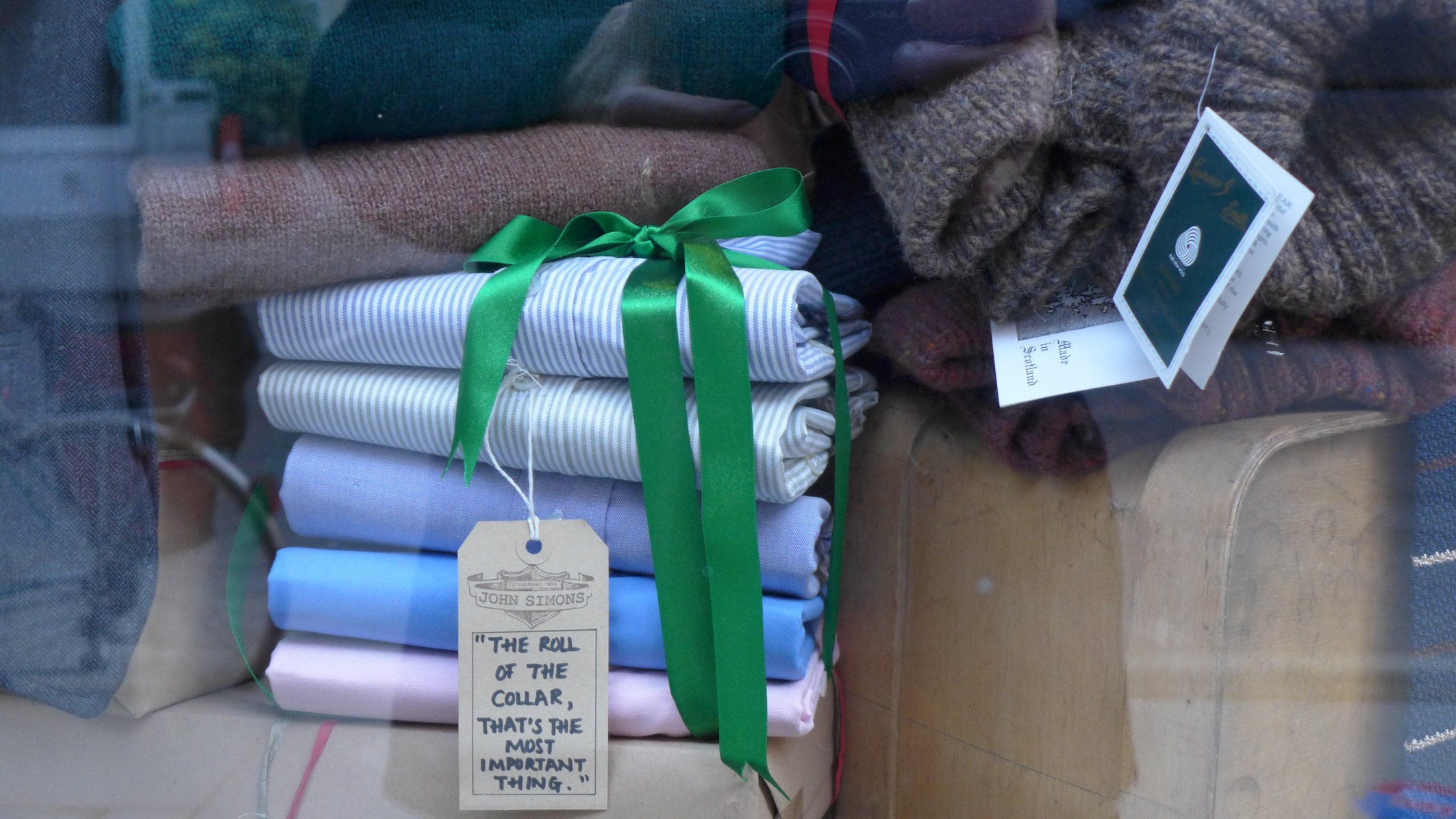
Check shirts and chunky knit sweaters in the shades of a New England fall, and shawl collar cardigans. Brooks Brothers polo shirts, and Baracuta (aka Harrington) jackets, Grenfell raincoats, manly boots by Red Wing and Sebago, and triple welted brogues from Florsheim. And J.Simon’s signature garment, the button Oxford cotton shirt, the backbone of any modern man’s wardrobe. “The roll of the collar, that’s the most important thing,” reads a hand written tag in the window.

For men who cite Cary Grant and Steve McQueen as style icons and marvel at the perfection of Miles Davis’ green button down shirt on the cover of the 1958 album ‘Milestones’, J.Simons is the Holy Grail. Here is the missing link between Savile Row and Hollywood. Mid-Atlantic tailoring for men who want to be smart – but never stuffy.

But J.Simons is much more than a place with the right brands. The store’s unique talent is knowing its customers. Simons tells me about one, who moved to the US some years ago, and who annually and asks him to source, by phone, some trousers, shirts and maybe a jacket or two.

“He trusts me,” says Simons, picking out items he deems suitable for the California climate.

I trust him too. Each time I step into his new shop in Chiltern Street, after a generation in Covent Garden, he’ll look me over, allow for a modest shift in size, and then present me with the perfect tweed jacket, a pair of Bermuda weight dog-tooth slacks, or some Venetian ‘dress’ loafers. And, be bang on the money in size, shape, colour, and ‘look’ – every time.

“I match people to clothes,” says Simons, professorially. “It’s a knack.”

J.Simons,  46 Chiltern Street, London, W1U 7QR. 020 3490 2729/johnsimons.co.uk


Posted in shopping | Leave a comment

Hooray for Hornets

P1000645I confess to being a textbook male shopper: In as much as nine times out of ten I will put off buying clothes until the last minute, and then walk away with the first the thing I try on, in the first store I visit; it probably explains why my cupboards are full of unworn clothes, still in their cellophane wrappers, with their tags and labels:

Trophies of a guilt ridden consumer who doesn’t like to look as though he’s just stepped out of a changing cubicle.

Three Hornets are better than one.

Three Hornets are better than one.

Kim, on the other hand, is in her new togs within seconds of returning home. Wearing them so frequently over the ensuing days and weeks that I have to ask her to change.

But that was old was me, before I’d stepped inside Hornets, on the ‘S’ bend, half way up (or down, depending on how you look at it) Kensington Church Street, and discovered the joy of genuinely good, elegant, and above all seductively affordable – vintage clothes. Secondhand if you are old school.

I can still recall that first time, as vividly as my debut Cuban cigar. It was like – coming home. So this is what life and shopping and sensual joy are all about. Described by the effusive owner Bill Hornets, as the Ascot/Wedding/Clearance Shop, I was confronted by rails of frock coats and dinner suits, tweed suits, ties, cravats, and a personal indulgence of mine, waistcoats (aka vests). I remember buying two waistcoats; one in apple green, and quite fitted, and another in Lincoln green, with acetate buttons and lapels. I think I got the two for the price of one, and even that wasn’t very much. I returned a few months later for another, in tweed, that had been made, bespoke, for an army major.

P1000646

P1000648

Patrick, the tall Portuguese assistant, dressed for a day in the country, was more like a butler crossed with a stylist, suggesting colours and fits, enjoying the task of matching the clothes to the man.

At the back of the shop, some pinned at awkward angles on the walls, were battered wax cotton raincoats, that looked as through they’d been pulled through the gorse backwards a few times. Bill (aka The Guvnor) explains that they sell a good many used Barbours (£79-£129) to young army officers who, are attending their first shoots, but don’t want to look as though they are new to ancient outdoors pursuits.

Therein lies the key to vintage wear; it doesn’t look new. Good clothes, well made clothes, that radiate the discreet taste of a man desirous neither to flaunt some ghastly label, nor appear to have succumbed to another whim of fashion. Hornets exists for men such as these.

And it gets better, because there isn’t just one Hornets – there are three, each one different from the next. The other two side by side in Kensington Church Walk, a peaceful pedestrian lane between Holland Street and the High Street. In one there are suits, some off the peg and others Savile Row bespoke ((£90-£450 – the top price for a Huntsman that new would set you back several thousands), shoes, ties, scarves, and a range of new top hats (from from £49 to £229). The other shop is in some ways the more eccentric, specialising in sporting clothes, casual jackets, knitwear, and that great misunderstood garment the car coat.

It’s where I found my 1970s double breasted Yves Saint Laurent blazer, with brass naval buttons, twin flaps, and lapels you could launch jets off. I seem to recall paying about £100. Recently, with a view to knocking them dead at Christmas parties, I was to have bought a three button bespoke Balmain velvet jacket, in burgundy, for about the same price. But I remain one who hesitates, and while I obfuscated between a Mille Feuille and a Frangipan at Patisserie Valerie, the jacket was snapped up.

There are mansion flats opposite the two Hornets, in Kensington Church Walk, with a low wall upon which Bill and his small, and sartorially cognitive team, place cushions, come rain or shine. This is their office, a sort of al fresco style surgery, where friends and customers chat about anything from smoking jackets, to the way the country is going to the dogs. There were Spanish tourists buying cricket sweaters, a woman with very red lips and a theatrical manner, and a local sculptor on my last visit.

Bill, resplendent as ever in a voluminous tan 1930s leather driving coat, cuts an impressive figure. Today, beneath a battered trilby, he is operatic, and he can fashion a good quote as fast as snapping a hat brim.

“Hornets sells clothes to men and boys who are turning into men. Anything from 16 to 76 is our range.

“This is a classic masculine look. Simple but very strong, maintaining that the lady on your arm must shine, not you.

“I sell style – not fashion.”

Hornets, 36b Kensington Church Street, London W8 4BX & 2&4 Kensington Church Walk, London, W8 4NB. 0102 9937 2627/1515. www.hornetskensington.couk

Posted in shopping | Leave a comment

The Man From Whitton

I met a man from Whitton the other day. “Where,” you say. Well just hang on moment. He didn’t actually say he was from Whitton, at first. Initially, he only confided that he was from somewhere near Twickenham, whereupon noticing an imperceptible shift in my demeanor (a slight inquisitive tilt of my head perhaps) he confessed to hailing from the next stop down the track; Whitton.

Having spilled the beans, he then leant back to get a clearer view of my expression. Like a man who has just admitted to secretly wearing his wife’s clothes he looked to see my reaction, his apprehension, and a hint of embarrassment, writ large.

In fact, I was thrilled by his admission. In over 50 years he is the first person I have met who comes from the town I grew up in. Not one person, in all that time, had heard of Whitton; my town. It was as if Whitton didn’t exist. Until now.

“Whitton? Where? Never heard of it.” It’s like a mantra that you get so sick of hearing you stop dealing with facts and delve into fiction. “Me, oh, I’m from Twickenham, or  really it’s Richmond, not far from Isleworth. You know, near a place called Whitton, that nobody has ever heard of. Then giving a sort of knowing laugh.

Whitton Railway Station

Whitton Railway Station

People from Hammersmith, Portsmouth,  Manhattan, St.Michel, Milan, Katmandu, even Neasden or Little Rock, places with real names and identities, cannot imagine quite how deflating it is to set foot in the world, armed with a rucksack, passport and unbridled enthusiasm, to be universally met with blank puzzlement.

Bending geographical boundaries is not exclusive to Middlesex and the hinterlands of west London. I’ve met those who, in an effort to impress, used to say they came from South Chelsea, when in fact they were from Battersea. I met an artist who claimed to be from Los Angeles, when his home was in Bakersfield. And Shoreham-By-Sea is full of folk who seem to think they live in Brighton. But until that day I’d never met anyone who came from Whitton. I’d begun to think I’d imagined my childhood.

The River Crane at Whitton

The River Crane at Whitton

Nobody beyond the eastern flightpath into Heathrow has ever heard of it. I’ve met people in Richmond, ten minutes by car, or three stops back up the line by train, who haven’t. My father hadn’t heard of it in the 50s when an estate agent called Hammond, to my mother’s eternal shame, insisted they take a look.

That’s the reason why the man, of whom I write, was reluctant to name his town; it was the fear of having to excuse himself, once again, and explain how he hails from an unknown 1930s suburb, just off the A316, that comprises a high street, a modern brick built church, a big white pub called the Winning Post (famous for a concert by Osibisa the Afro/rock band, and lesser so for barring me) and streets of semi-detached homes, many with roof extensions, and nearly all with paved car parking in front of the bay windows where gardens used to be. There is one pub in the high street, The Nelson. The local petrol station and cinema both closed down when television was still black and white.

I lived in Whitton for 20 years, and even I cannot say, with any authority where the town begins and ends. Beyond the high street, with its railway bridge and architecturally underplayed station (see photograph), Whitton dissolves into a patchwork of streets. A thin, and peaceful, nature reserve follows the course of the River Crane, skirting the town’s southern flank on its serpentine course to Isleworth and The Thames. Kneller Hall, the home of the Royal School of Military Music, is a grand mock Tudor confection, on the other side of town, just a few hundred yards from the reason many people come across Whitton in the first place; as somewhere to park their cars if they are attending a rugby match at Twickenham Stadium, the monumental  home of English rugby. The stadium has grown out of all proportion from the municipal green four stand stadium I competed in as a schoolboy. Today it is a looming extraterrestrial inferno of passion.

But that’s Twickenham Stadium. It might be on ‘our’ side of the A316, but it’s named after Whitton’s bigger neighbour, as if the town on which it stands (just) doesn’t exist.

And that’s the rub; I grew up in a town that doesn’t exist. So on behalf all those blighted by hereditary anonymity, cast into the mists of non existence, I want to thank that man, on the Riverside Terrace of Fulham Football Club, for standing tall and proud, and proclaiming – albeit in hushed tones – that like myself, he is from Whitton; a town where ordinariness matters.

Posted in London | 2 Comments